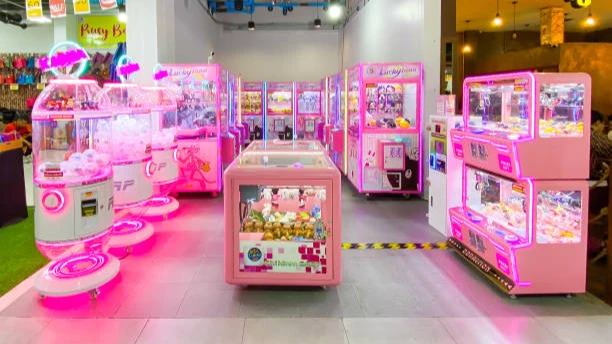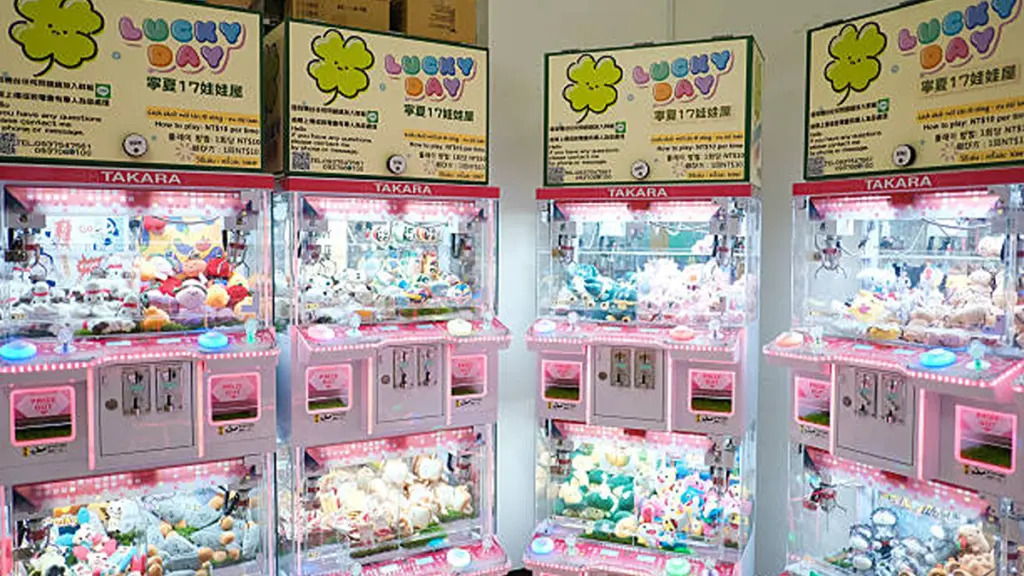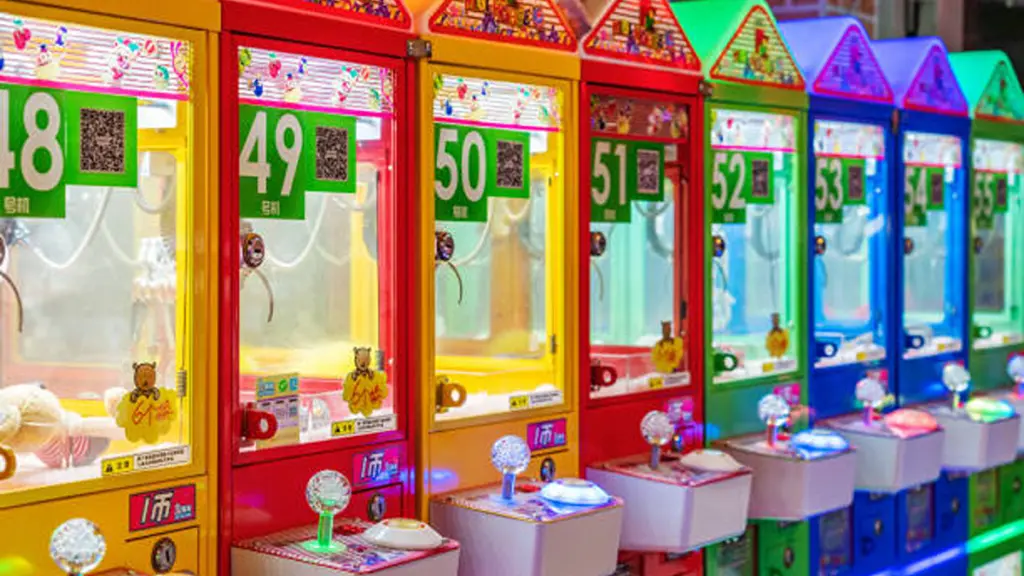


Claw machine operating costs go beyond the initial price of buying the machines. Once your arcade is running, you also need to cover rent, 電気, 賞品, メンテナンス, and payment fees. These costs can vary depending on your venue size, number of machines, play volume, prize settings, and payment system. Understanding these ongoing expenses helps you estimate the monthly cost of each machine and see whether expected play revenue can support the business. This guide breaks down the main operating costs and provides a practical worksheet for monthly planning.
Purchase Price vs Operating Cost: The Split
“What does a claw machine cost?” has two very different answers:
- Purchase price: The one-time cost of buying the machine. It varies by machine type, サイズ, configuration, そしてカスタマイズ. We cover the purchase side in クレーンマシンの価格はいくらですか? 要因 & での価格分析 2026.
- Operating cost: The recurring cost of keeping each machine running after it arrives at your venue. This includes rent, power, 賞品, メンテナンス, and payment fees.
Operating cost deserves just as much attention as the purchase price because it compounds over time. A machine may be paid for once, but it continues to generate costs every day. A lower-priced machine with frequent failures or high prize consumption can therefore cost more to operate than a better-built cabinet with a higher initial price.
For practical planning, think of it this way:
- Purchase price determines your initial investment.
- Operating cost determines your ongoing monthly expenses.
- Revenue per machine shows whether those costs can be supported by actual play volume.
This guide breaks operating costs into five key areas including location, power, 賞品, メンテナンス, and payment fees — and brings them together in a monthly worksheet you can use for your own venue.
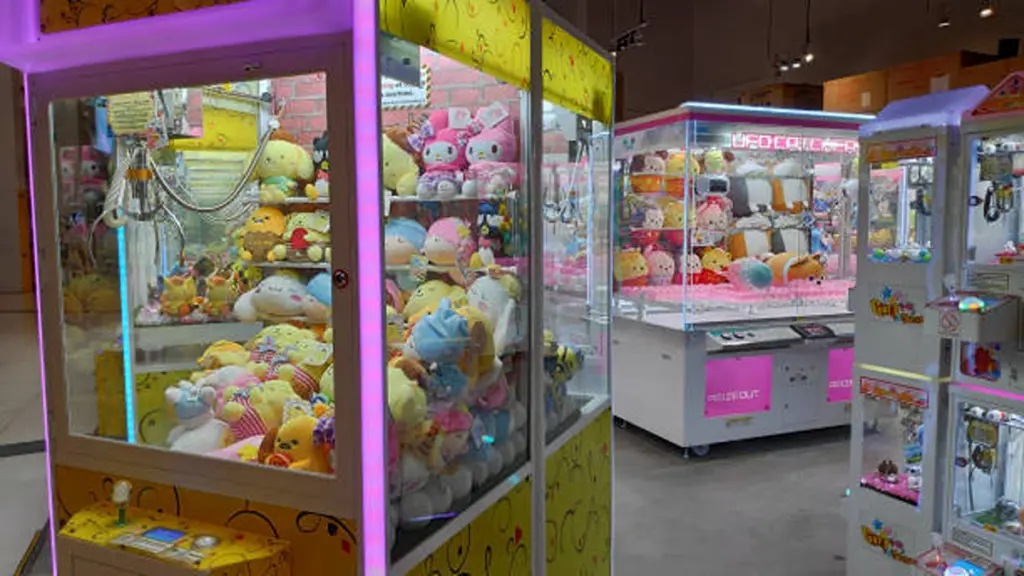
Location Rent and Revenue Share
Location cost usually comes in two forms, and they behave differently.
1. Fixed rent
A flat monthly payment per square metre or per venue. It is predictable, but the cost stays the same in both strong and weak months, so seasonal dips can directly reduce your margin.
2. Revenue share
A percentage of machine income paid to the landlord or site partner. The cost moves with your takings, which can make it more flexible for locations such as malls and cinemas.
Which structure you get depends on the market and property, so model both before signing.
A simple break-even check can help:
- Estimate realistic monthly revenue per machine based on plays per day × price per play × active machines.
- Calculate how much rent the expected revenue can support while leaving the margin you need.
- Compare the result with the proposed fixed rent or revenue share.
If fixed rent only works at revenue estimates you cannot reasonably support, negotiate a revenue share instead or consider another site. The goal is to make sure location costs fit the revenue potential of the machines.
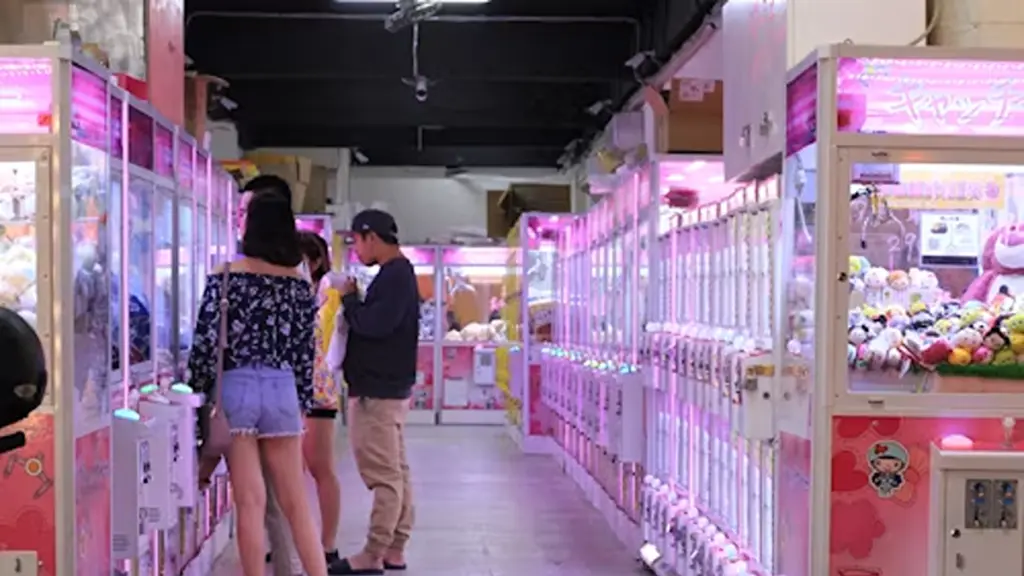
Venue size also belongs in this calculation. あ 50 に 100 ㎡ store carries one rent line and a compact machine plan, while larger floors scale both together. 私たちの claw machine arcade planning guide covers the machine count side of that equation.
Plan Your Claw Machine Investment Before You Buy.
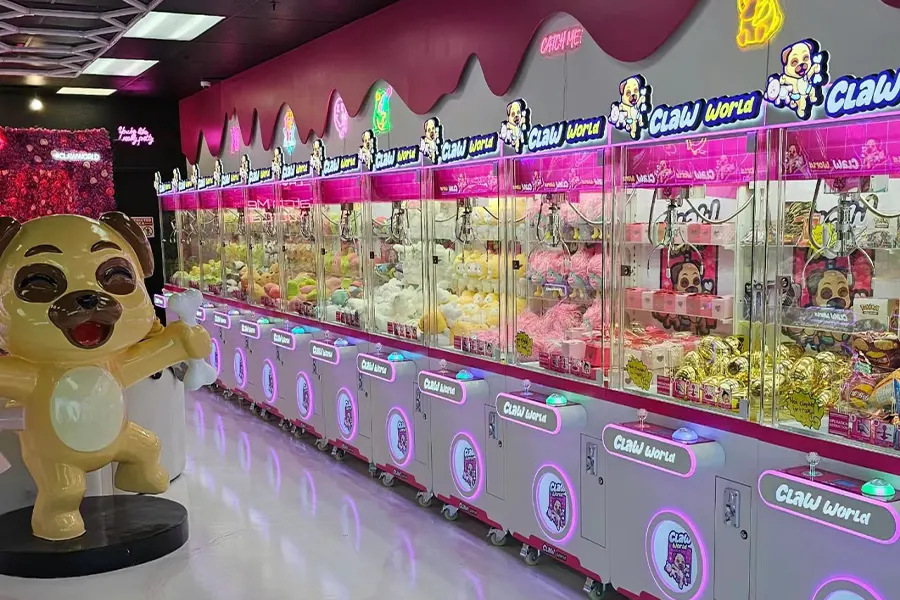
Power Consumption per Machine
Claw machines are not heavy electrical loads. They are lighting heavy loads, and lighting runs the whole time the machine is switched on.
What you pay per month follows a formula you can run for any machine before you order it:
Monthly power cost = rated wattage × daily running hours × 30 × local electricity price
Rated wattage is printed on the machine’s rating plate and varies by model and size class. A mini or tabletop cabinet draws materially less than a full size machine running large light arrays because the lighting surface is smaller.
As a worked example of the arithmetic, not a specification, a machine drawing 300 W for 12 hours a day at an electricity price of $0.15 per kWh costs about $16 月あたり:
0.3 kW × 12 h × 30 d × $0.15 = $16.20
For your own calculation:
- Use your model’s actual plate rating.
- Add your expected daily running hours.
- Apply your local electricity tariff.
- Request the per model rating from your supplier when you request the quotation, so this cost is included in your model before production starts.
Two factors can help control the power cost:
1. Machine selection
Different machine sizes have different power requirements. A mix of smaller and full size cabinets can help manage the overall power consumption of the arcade.
2. Machine quality
Stable power supply units and properly rated wiring can help reduce electrical problems and unnecessary energy loss. Better electrical components can also reduce maintenance issues and downtime, which are covered in the next section.
Energy efficient design choices for arcades are covered in our energy efficient arcade equipment guide.
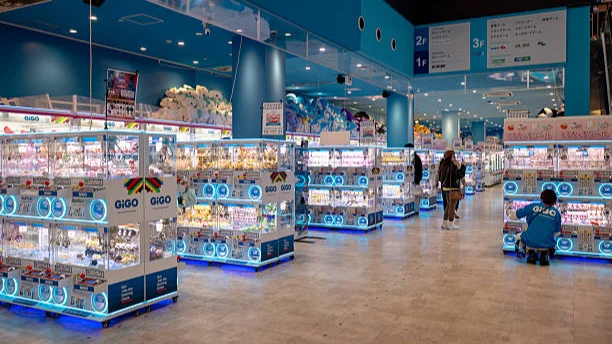
Prize Restock and Prize Cost Ratio
Prizes are the largest controllable cost in most claw machine businesses, and the only one customers directly experience as your product.
The key is to set a ratio per machine:
Prize cost per win ÷ revenue per play cycle
Once you set a target ratio, every restock decision becomes easier to calculate. You know what a prize may cost before you shop for it, instead of discovering the actual cost after the month closes.
The ratio can vary depending on the type of prize and machine:
1. Working prizes
Low value, high frequency prizes can keep the per play cost tight on working rows while supporting a consistent win experience that encourages players to return.
2. Showcase prizes
Oversized plush prizes behind glass can serve as both inventory and visual attraction. They are commonly used in giant and life size cabinets where they can attract plays and create photo opportunities. Their cost should be included in the operating ratio for the machines that carry them.
Restock frequency also matters. An empty prize field can stop income immediately, so storage capacity and a planned restock schedule should be treated as part of daily operations.
The prize system should also be considered when planning the store layout. Redemption counters placed along the exit path and display cases visible from the play floor can increase prize visibility and reinforce the value of the machines carrying those prizes.
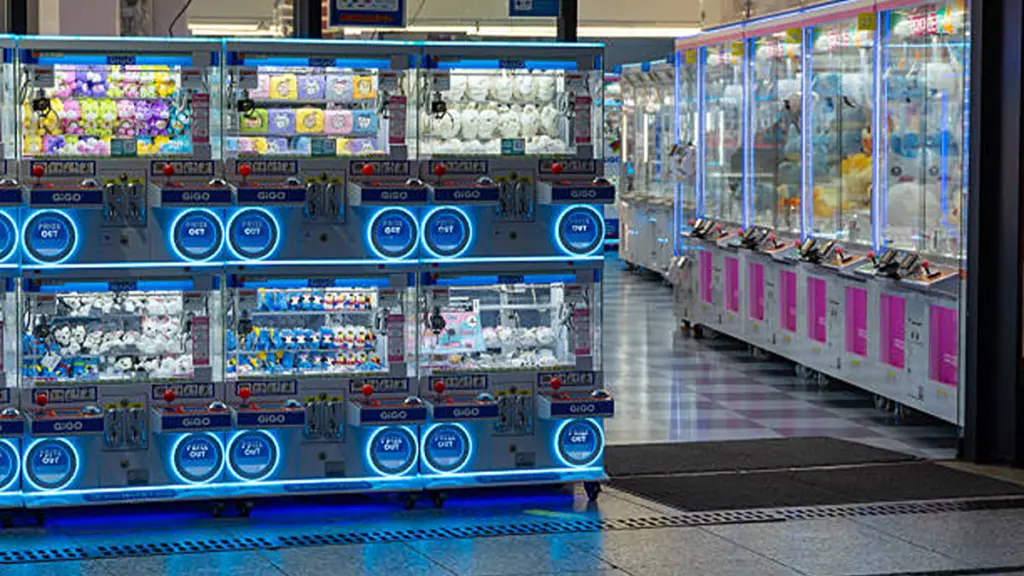
メンテナンス, Parts and Downtime Cost
Maintenance costs can change as a claw machine gets older. The first stage is usually covered by the manufacturer’s warranty, while ongoing maintenance and spare parts become more important after the warranty period.
1. Warranty period
Commercial claw machines typically come with a manufacturer’s warranty, but the coverage and duration can vary by supplier and product. Before purchase, confirm what the warranty covers and how to handle repairs or replacement parts if a machine develops a problem. Reporting issues to the supplier promptly can also help avoid unnecessary downtime.
Tongru provides a 1 year full machine warranty including parts for machines from our range.
2. After the warranty
Maintenance and spare parts become the operator’s responsibility after the warranty period. For budgeting, carry a monthly parts allowance per machine and consider keeping common wear items such as 爪, belts, とボタン in stock, so minor failures can be handled without waiting for a new shipment.
Tongru also provides ongoing spare parts and technical support after the warranty period.
The bigger maintenance cost is not always the part itself. It is the ダウンタイム.
A machine that is not playing earns nothing while its rent and power costs continue. This means frequent failures can increase the impact of several other operating costs at the same time.
How to Reduce Maintenance Costs
One practical way to control maintenance costs is to purchase machines that meet the required quality and safety standards from the beginning. Buyers should check key electrical components, 配線, 制御システム, certifications, warranty coverage, and spare parts support before placing an order.
Tongru offers commercial claw machines with UL rated wiring, a self developed mainboard, and branded power units, backed by a 1 year full machine warranty including parts and ongoing spare parts and technical support. Our cabinets are manufactured in our own 4,600 ㎡ factory under ISO 9001 品質管理.
Common failure modes and their fixes are covered in our claw machine problems and solutions reference. For markets with specific electrical safety requirements, see why UL certification matters for US arcade operators.
Payment Processing Fees
Every payment method comes with its own cost. The main options are cash and cashless payment, and each affects operating costs differently.
1. Cash payment
Cash creates costs through labor and handling, 含む:
- Coin collection
- Cash counting
- Banking runs
- Cash float kept in machines
2. Cashless payment
Cashless options include card readers, QR payments, and app payments. These usually involve a per transaction fee set by the payment provider and local market.
Neither option is completely free. The costs simply appear in different forms.
How to Control Payment Costs
For a claw machine arcade, payment costs depend on how players pay for each play. Coins or tokens avoid transaction fees but require cash collection and handling. Card, QR, or app payments are more convenient for players but usually include a transaction fee.
1. Choose the right payment mix
あ hybrid setup can combine both options. 例えば, low-value plays can use coins or tokens, while high-traffic machines can offer cashless payment for greater convenience.
2. Confirm the setup before ordering
Some claw machines require specific configurations for bill acceptors or payment modules. Confirm your preferred payment system with the supplier before production.
3. Calculate the cost
For cashless payment:
Monthly payment cost = cashless transaction value × transaction fee rate
Compare this cost with your cash handling expenses and expected play volume to determine the most suitable payment setup for your arcade.
A Monthly Operating-Cost Worksheet
Put the five components side by side and the business becomes legible. Run this per venue, 毎月, against actual takings:
| Cost Line | What Drives It | How You Control It |
|---|---|---|
| 位置 (rent or share) | 市場, property type, floor area | Negotiate revenue share where fixed rent breaks the model |
| 力 | Machine wattage × opening hours × tariff | Size-class mix, running hours, plate rating at order time |
| Prize restock | Win rate, prize value, play volume | Cost ratio per machine, showcase vs working prizes |
| Maintenance and parts | Machine age, ビルド品質, wear items | Warranty year, wear-item stock, build quality at purchase |
| Payment fees / cash handling | Transaction mix, provider rates | Hybrid cash/cashless routing configured at order time |
Use the worksheet every month to compare your actual costs with machine revenue. If one cost keeps increasing while revenue stays stable, check that area first. 例えば, rising prize costs may require a review of prize value or win rates, while increasing maintenance costs may point to machine quality or downtime issues.
Regular monthly tracking helps you identify cost changes early and adjust your operation before they significantly affect your margins. For more common operating mistakes, 私たちのを参照してください 上 10 claw machine store mistakes.
よくある質問
How much does it cost to operate a claw machine?
Operating cost has five components: 位置 (fixed rent or revenue share), power, prize restock, maintenance and payment fees. Power for a single cabinet is usually modest — lighting-driven rather than motor-driven — while prizes are typically the largest controllable line. Model each component per machine per month rather than trusting a single total, because the mix between fixed and variable costs decides how resilient the business is in a slow month.
How much electricity does a claw machine use?
Monthly power cost = rated wattage × daily running hours × 30 × your electricity price. Take the rating from the machine’s plate — it varies by model and size class, with mini and tabletop cabinets drawing less than full-size machines with large light arrays. As an arithmetic example only: 300 W running 12 hours a day at $0.15/kWh comes to roughly $16 一ヶ月. Ask your supplier for the per-model rating at quotation time so this line is exact before you order.
What are the ongoing costs of a claw machine business?
Beyond the five machine-level lines — location, power, 賞品, maintenance and payment fees — a claw machine business carries staffing, cleaning, insurance and licensing depending on the market. The machine-level lines are the ones you control at purchase time: build quality sets the maintenance and downtime line, size-class mix sets the power line, and payment configuration is fixed at order time. A monthly worksheet against revenue per machine catches drift while it is still reversible.
How much does claw machine maintenance cost?
In the first year, close to zero for parts: our machines carry a 1-year full-machine warranty. After warranty, support continues for the machine’s life — paid spare parts shipped on request plus technical guidance — so budget a monthly parts allowance and stock wear items like claws and buttons to convert failures into swaps instead of shipment waits. The larger hidden cost is downtime, which build quality controls: self-developed mainboards, UL-rated wiring and branded power units are what keep machines earning.
What is the monthly cost to run a claw machine?
There is no universal number because the largest line — location — depends on your market and contract structure, and prizes scale with your play volume. The reliable method is the five-line worksheet: rent or share + power (from the plate rating and your tariff) + prize cost at your target ratio + parts allowance + payment fees, all divided across active machines. Run it monthly against revenue per machine and you will have a more accurate answer for your venue than any industry average.
Purchase price is a one-time decision; the operating side is the business. Fix the buy-side number with the claw machine price breakdown, then put both halves together on a floor designed for the math — start with the free 2D/3D layout design and order against a plan that already carries its costs.