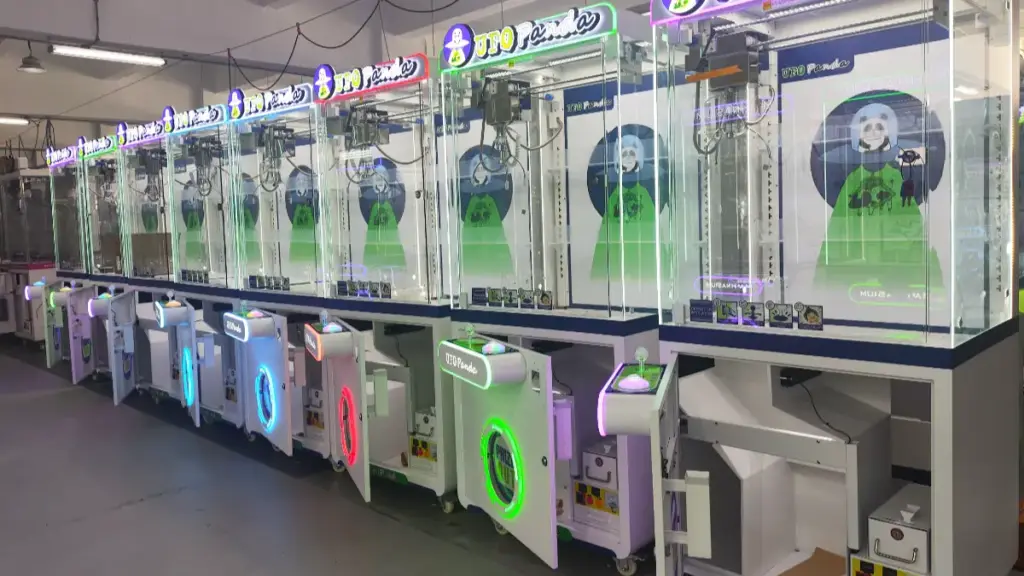


Single-player and multiplayer claw machines serve different purposes on a commercial arcade floor. A 100-square-meter venue may need compact, flexible cabinets, while a family entertainment center may benefit from several player stations in one area. For arcade operators and equipment buyers, the decision affects floor layout, player capacity, prize planning, and the initial equipment budget.
This guide explains how the two setups differ and what each requires in terms of space, عملية, والصيانة. It also helps buyers match machine configurations to venue size, customer mix, and peak-hour traffic, then assess whether a combination of single-player and multiplayer claw machines would make better use of the available floor space.

What Are Single-Player Claw Machines?
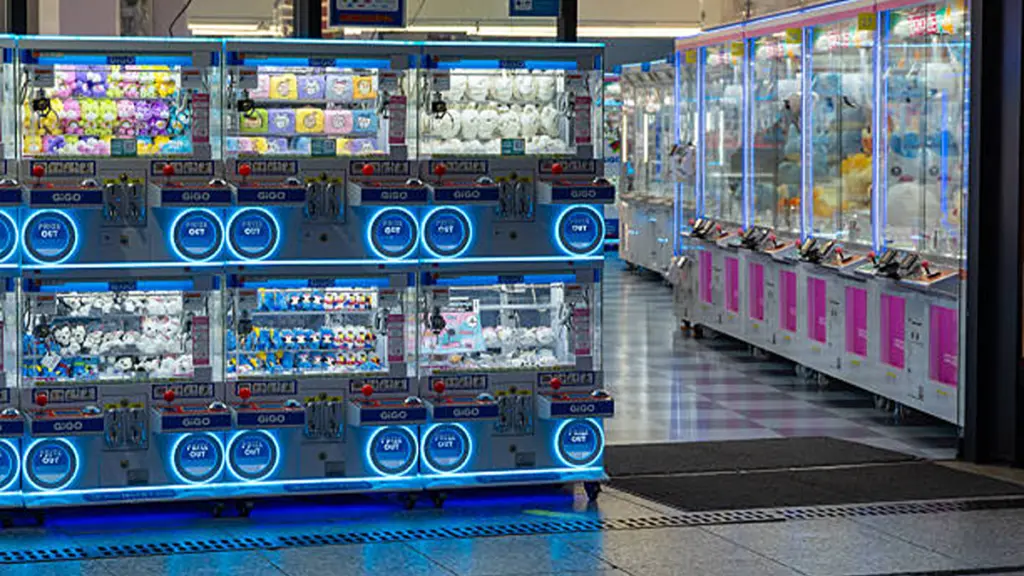
A single-player claw machine is designed for one person to operate at a time. Each cabinet has an individual play station, allowing players to control the claw, position it over a prize, and attempt to grab an item independently. A standard setup includes a joystick or directional controls, a play button, a payment interface, and a prize display area. When another customer wants to play the same machine, they must wait until the current round ends.
Most single-player claw machines use independent cabinets, making them easy to arrange in different parts of an arcade. Their individual design also gives operators more control over prize selection, game settings, and daily performance. Common features include:
- Flexible Floor Placement: Individual cabinets can stand against walls, line up in rows, or occupy corners and smaller spaces. Operators can add or relocate machines without redesigning an entire equipment area.
- Separate Prize Configurations: Each machine can hold a different selection of prizes, مثل الألعاب الفخمة, collectible figures, دمى, or small accessories. This allows operators to create different prize themes for children, المراهقين, and other customer groups.
- Independent Game Settings: Operators can adjust claw strength, game parameters, and prize quantities for each cabinet, depending on its configuration and operating requirements.
- Individual Performance Tracking: ربح, play frequency, prize replenishment, and machine utilization can be monitored separately. This makes it easier to identify popular prize categories and machines that need operational adjustments.
لمشغلي الممرات, single-player claw machines offer a practical way to build a varied equipment lineup. Multiple cabinets can serve different customer preferences while allowing each unit to operate and be managed independently.

What Are Multiplayer Claw Machines?
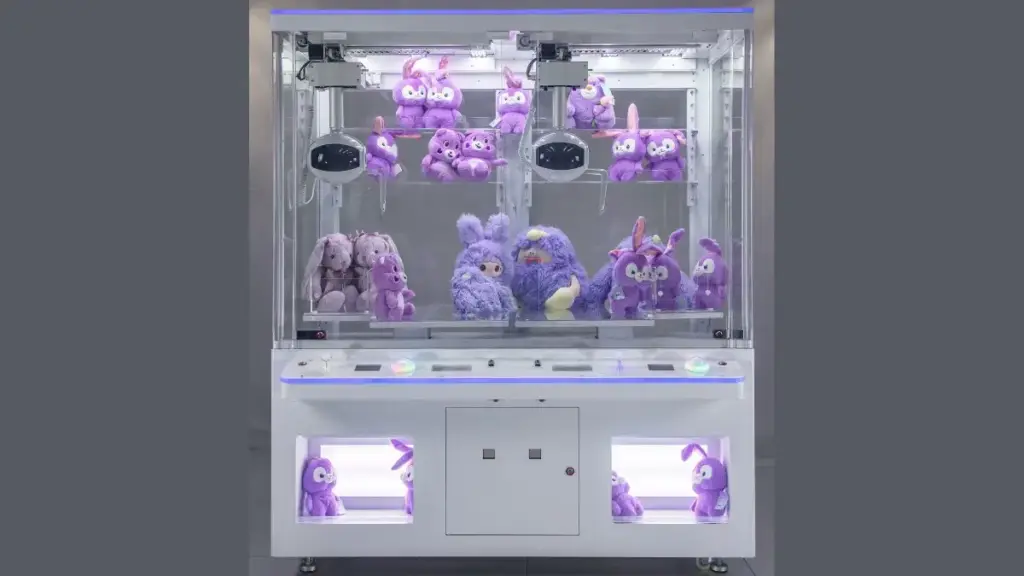
A multiplayer claw machine allows two or more players to operate the same cabinet at the same time. Depending on the machine design, it may have two, four, or more independent player stations arranged around a shared prize area. Each station typically has its own joystick or control buttons and payment interface, allowing players to start their own rounds without waiting for another person to finish.
Unlike a row of separate single-player cabinets, a multiplayer claw machine brings several play positions into one integrated structure. The cabinet may share a prize area and central system, although payment methods and control arrangements vary by model. Its main features include:
- Multiple Independent Play Stations: Each player has a dedicated control position and can operate a claw independently. The number of stations depends on the cabinet design.
- Shared or Integrated Prize Area: Several players may access the same prize display or play area, creating a more interactive game environment. The actual prize arrangement depends on the machine’s structure.
- Concentrated Equipment Layout: Multiple play positions are integrated into one cabinet, helping operators create a dedicated group-play area instead of arranging several individual machines along a wall.
- Group Interaction: Friends and family members can play side by side, watch each other’s attempts, and compete to grab prizes. This format is particularly suitable for venues where visitors often arrive in groups.
Multiplayer claw machines are commonly considered for family entertainment centers, large arcades, and other venues with group-oriented customer traffic. Their integrated design can accommodate several players within one equipment area, but operators should also account for cabinet dimensions, player standing positions, and surrounding walking space when planning installation.
Single-Player vs. Multiplayer Claw Machines: الاختلافات الرئيسية
Both machine types use the same basic claw game, but their cabinet structures create different operating conditions. لمشغلي الممرات, the main differences involve player capacity, floor space, equipment investment, prize management, and daily maintenance. The following table compares the two setups across key purchasing and operating factors.
| عامل المقارنة | Single-Player | Multiplayer |
|---|---|---|
| Player Capacity | One player per cabinet | Multiple players simultaneously |
| Game Experience | Individual gameplay | Shared or competitive gameplay |
| متطلبات الفضاء | Individual cabinet footprint | Depends on integrated cabinet design |
| Equipment Layout | Flexible placement across the venue | Concentrated player stations |
| Prize Configuration | Separate prize selection for each machine | Depends on shared or independent prize areas |
| الاستثمار الأولي | Can be purchased one unit at a time | Depends on the number of stations and cabinet design |
| صيانة | Each cabinet can be serviced independently | Depends on the shared systems and cabinet structure |
The main advantage of single-player claw machines is their flexibility in equipment placement and daily management. Operators can install different machines in separate areas, assign each cabinet its own prize selection, and adjust game settings based on individual performance. If one location attracts fewer players or a prize category receives little interest, the operator can relocate that cabinet or change its contents without affecting the rest of the equipment lineup. This setup also allows new businesses to purchase machines in stages rather than committing to a larger integrated unit from the beginning.
Multiplayer claw machines concentrate several play stations into one cabinet, making them suitable for venues that attract families and groups. Multiple customers can play at the same time, while the shared equipment area creates a more visible group entertainment point. لكن, this arrangement requires more attention to the cabinet’s installation position, player standing space, and surrounding traffic flow. Maintenance planning also depends on the machine’s internal design: a problem with a shared control or prize system may affect more than one station. Operators should therefore review the system structure and available technical support before placing an order.
When Should You Choose Single-Player Claw Machines?
Single-player machines fit buyers who need layout freedom, prize variety, and control over how fast money goes into equipment. Three venue conditions make that setup the stronger choice.
Limited Floor Space and Flexible Layouts
An 800 mm wide cabinet fits where larger equipment cannot: along a retail wall, in a mall corner, beside a corridor, or between other attractions. Operators can start with the machines that fit the current space, then add, remove, or rearrange units as the venue changes. No single cabinet locks the layout into one fixed position. For a first pass at placing cabinets, ال claw machine floor plan guide covers clearance and circulation basics that apply to every unit.
Different Prize Themes and Target Customers
Each single-player machine carries its own prize plan, so one row can serve several customer groups at once. Plush toys suit children, licensed or collectible figures suit teenagers, and small gift items suit casual adult players. Because every cabinet holds a separate prize window, a theme that underperforms can be re-stocked or re-priced without touching the machines around it. This is the main reason prize-heavy arcades keep most of their floor in single units: the prize mix becomes a per-machine decision instead of an all-or-nothing one.
Starting or Expanding an Arcade Business
Commercial single-player machines are typically available with a minimum order of one unit. A new operator can open with a small fleet and reinvest early revenue instead of committing the full budget upfront. The staged path also works in reverse. Buy a few machines, watch which themes and positions produce repeat play, then order the next batch to match the data. Operators planning that expansion route can compare it with the broader wholesale claw machine buying process once order quantities grow.
When Are Multiplayer Claw Machines a Better Choice?
Multiplayer cabinets earn their footprint in venues built around groups, peak-hour traffic, and social play. The same three conditions below also mark the cases where a single-machine row underperforms.
Family Entertainment Centers and Group-Oriented Venues
مراكز الترفيه العائلية, large arcade zones, and party-oriented venues serve customers who arrive in groups of three to five and want to do things together. A four-station cabinet absorbs that whole group in one game cycle, while a row of singles splits the group across machines that finish at different times. Placed near a party area or a venue entrance, one multi-station machine also works as a visible anchor that draws the group toward the prize zone.
High-Traffic Entertainment Areas
In a busy mall arcade, the constraint is not cabinet count but how many customers can play at once in the available space. A four-station unit runs four game cycles in parallel on one footprint, which shortens queues at peak hours. The catch is utilization: the stations all need customers to justify the footprint they occupy. Estimate demand from peak-hour visitor counts and current machine usage before committing, using the method in the guide on how many claw machines a venue actually needs.
Creating a Social Gaming Experience
Shared cabinets turn a solo grab into a group activity. Friends challenge each other on the same prize, families coach their children through a round, and onlookers gather around attempts on high-value prizes. That interaction is hard to reproduce with isolated cabinets, which is why operators position multi-station units as the interactive centerpiece of a zone rather than as one machine among many.
How to Choose the Right Claw Machine Setup for Your Arcade?
The setup decision should come out of three checks on the buyer’s side: floor capacity, cost structure, and the technical details behind the quotation.
Evaluate Floor Space and Player Capacity
Measure the usable area and budget for more than the cabinet itself: player standing room at each station, walking space between machines, and maintenance access behind the units. Then convert peak-hour customer counts into a rough station count, because player capacity is a throughput question, not a cabinet question. One caution from venue planning: do not judge a machine only by its nominal player count. A four-station unit in a spot that attracts one player at a time behaves like a single machine with a four-times footprint. Plan the arcade machine mix against real traffic patterns, not against spec-sheet numbers.
Compare Equipment Costs and Operating Requirements
Compare quotations per player station rather than per cabinet, since a four-station unit is usually priced above a single cabinet but below four of them. Operating costs behave differently on each side. Single machines mean more prize windows to restock and more cabinets to service, while a multiplayer unit concentrates prize loading and servicing into one system whose structure varies by design. Confirm the payment system options, spare-parts supply, and warranty terms in writing before ordering, and check how each supplier structures after-sales support beyond the first year.
Check Customization and Technical Specifications
Before signing, pin down the specifications that determine whether the machine fits the venue. Check cabinet dimensions, station count, claw configuration, prize window size, payment methods, game parameters, and the control system. Appearance and function customization is standard practice among established manufacturers. OEM and ODM claw machine services adapt colors, العلامة التجارية, cabinet size, and station count to a specific floor plan. Tongru builds cabinets this way, so buyers with unusual room shapes or theme requirements can request a layout-driven configuration instead of adapting the venue to a stock cabinet.
Should You Combine Single-Player and Multiplayer Claw Machines?
For most venues, the two setups are not competitors but complementary roles. Single-player machines spread along walls and aisles, carrying the prize variety and the per-machine revenue tracking; multiplayer cabinets anchor the social zones where groups gather. The practical question is the ratio between them, and that ratio comes from four inputs: floor area, customer structure, ميزانية, and expected utilization of each station.
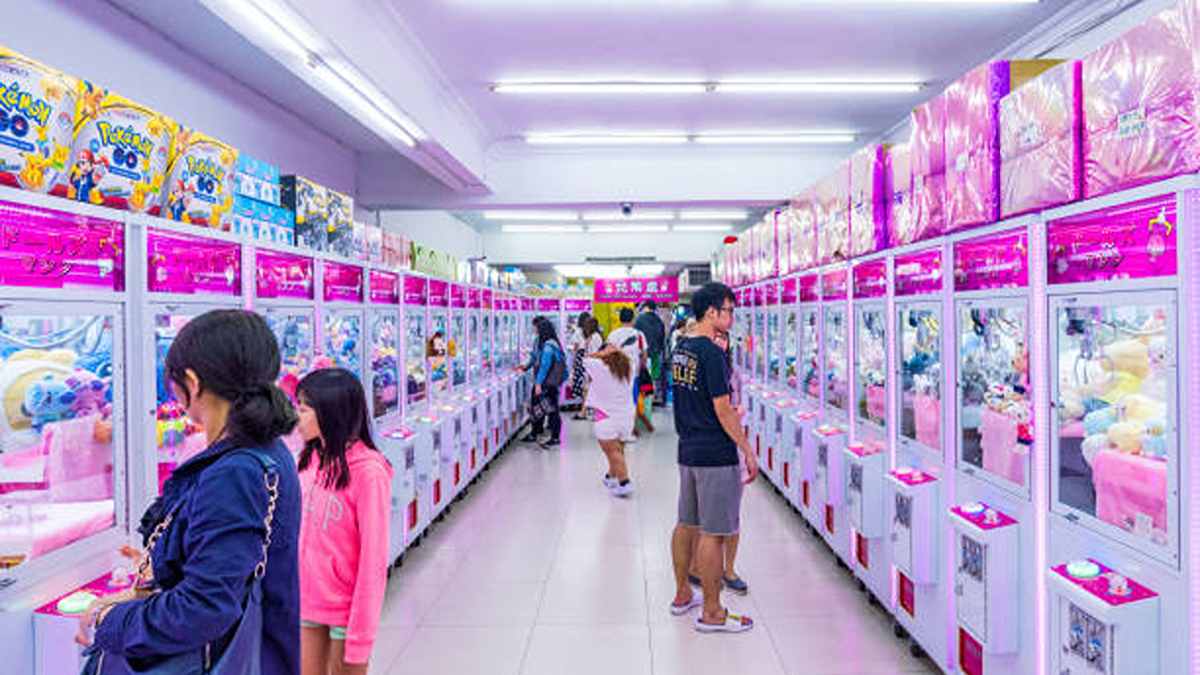
The combination looks different by venue size. A store in the 50 ل 100 square meter range usually runs on single-player cabinets, with a two-player unit as an optional centerpiece if group visits are common. A mall arcade in the 100 ل 300 square meter range can support rows of singles organized by prize theme plus one or two four-station units near the busiest entrance. Family entertainment centers above 300 square meters tend to dedicate whole zones: a prize wall of single machines, a social zone around multiplayer cabinets, and themed corners between them. Exact counts should follow the traffic data of the specific venue rather than any fixed formula.
الأفكار النهائية
Single-player and multiplayer claw machines serve different purposes in commercial arcades. Single-player models offer flexible placement and varied prize configurations, while multiplayer models support group play and accommodate more players at once. The best setup depends on venue size, customer traffic, المساحة المتاحة, and operating needs. Some arcades may need only one type, while others can combine both to serve different player groups.
تونجرو provides commercial claw machines with OEM/ODM customization options for different arcade layouts and operating needs. Before placing an order, assess your floor dimensions, peak-hour traffic, prize requirements, and target machine quantity. اتصل بفريقنا for equipment specifications and bulk-order details, or explore our one-stop claw machine solution for integrated equipment and layout planning.
الأسئلة المتداولة
Are multiplayer claw machines more profitable than single-player machines?
Not automatically. A multiplayer cabinet earns more only when its stations stay occupied during peak hours. If traffic cannot fill the stations, revenue per cabinet can fall below a row of well-placed single machines. Judge profitability by utilization data, not by station count.
How much space does a multiplayer claw machine need?
Four-station cabinets commonly span about 1.7 ل 2.0 meters along their longest side, plus clearance for players standing at each station and for staff access. Confirm the exact dimensions on the supplier’s specification sheet before finalizing the floor plan.
Can single-player and multiplayer claw machines operate in the same arcade?
نعم. The two setups share the same power, قسط, and prize-supply logistics, and most arcades mix them. Plan positions so multiplayer units anchor the social zones while single machines line the walls and fill the themed corners.
Can claw machines be customized for different arcade layouts?
نعم. Manufacturers can adjust cabinet dimensions, station count, claw configuration, prize window size, الألوان, and payment options. OEM and ODM services cover appearance and function changes, so machines can be built around a specific floor plan instead of the reverse.