

Opening a claw machine arcade starts with more than choosing machines. The venue needs the right machine count, practical traffic flow, suitable machine combinations, prize configuration and operating costs. A layout that looks full on paper may still leave machines underused, aisles too narrow or key operating areas difficult to access.
This guide covers the main planning decisions, aus venue capacity and machine placement to machine mix, prize configuration and revenue per square metre. Whether you are planning a dedicated claw machine store, an FEC, a mall placement or a cinema lobby, these principles can help you make better use of your available space.
From Idea to Floor Plan: The Turnkey Planning Path
A successful claw machine arcade starts with more than a machine list. Before placing an order, buyers need to turn a venue idea into a workable plan that connects space, equipment and operating costs.
The process typically follows five stages:
1. Measure the Venue
Start with the actual floor dimensions, entrances, columns, ceiling height, power access and other site conditions. Photos and basic building information also help determine what the space can realistically support.
2. Estimate Machine Capacity
Once the usable area is clear, calculate how many machine positions the venue can accommodate. This provides a starting point for budgeting and prevents overloading the floor with more cabinets than the space can support.
3. Plan the Layout and Traffic Flow
Map machine positions, aisles, player clearance, entrances, prize redemption and staff access. The goal is to create a floor that is easy to navigate and practical to operate.
4. Select the Machine Mix
Different venues require different combinations of machine sizes and formats. A dedicated claw machine store, mall placement and mixed arcade may each need a different equipment strategy.
5. Review the Complete Cost
The final plan should account for more than machine prices. Mieten, Strom, Preisauffüllung, maintenance and payment fees all affect the long-term operating model.
A turnkey supplier brings these steps together, connecting layout design, machine selection and supporting fixtures into one coordinated plan. This reduces the risk of approving a layout that later requires major changes during procurement or installation.
How Many Machines Does Your Venue Need?
Machine count depends on more than floor area. Buyers should consider usable game space, machine size and venue type before setting a target number. These factors provide a more realistic starting point for planning and budgeting.
Start With Usable Floor Area
A well-planned venue typically converts around 60–70% of gross area into game floor, with the remaining space used for circulation, counters, storage and other functions. A standard machine position generally requires about 1.5–2 ㎡, including the player area.
| Venue Band | Game Floor (at 60–70%) | Machine Positions | What the Band Rewards |
|---|---|---|---|
| 50–100 ㎡ store | ~32–65 ㎡ | 16–35 | Density discipline: one loop, zero dead corners |
| 100–300 ㎡ venue | ~65–200 ㎡ | 35–100+ | Zoning by player type, anchor machines, themed cabinets |
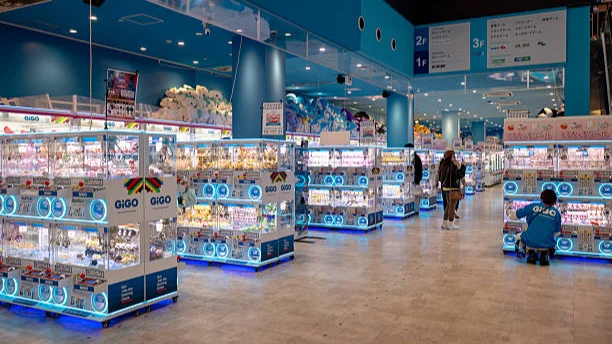
| 300+ ㎡ flagship / FEC | 200+ ㎡ | 90+ claw-dedicated, or 50–60 inside a mixed FEC | Destination design: giant and life-size stages, photo moments |
These figures are planning references rather than fixed capacity. The final machine count depends on the equipment and venue.
Adjust for Machine Size
Machine size directly affects how many positions a venue can accommodate. Mini and tabletop machines can support higher density, während full-size, giant and life-size machines require more floor space. The calculation should include both the cabinet footprint and the space needed for players to use each machine.
Consider the Venue Type
The same floor area may require different machine counts depending on the venue. A dedicated claw machine store can allocate more space to machines, while a Einkaufszentrum, cinema or FEC may need to reserve space for other functions and attractions.
Zusamenfassend, floor area sets the starting capacity, machine size adjusts it, and venue type determines the practical machine count.
Layout, Aisle and Traffic-Flow Principles
Once the machine count is clear, the next step is deciding how to position each machine. A practical layout should make machines visible, keep customers moving naturally, and leave enough space for both players and staff.
Design for Sightlines and Traffic Flow
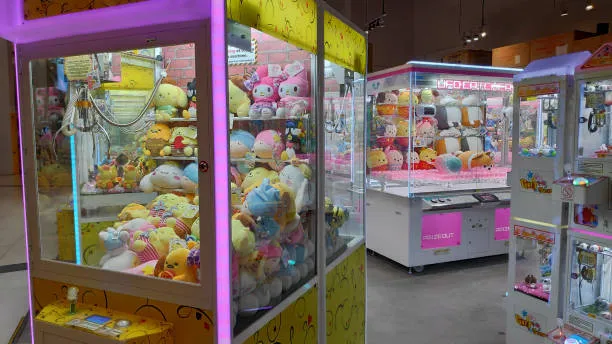
Place high-visibility machines where they can be seen from the entrance or main traffic paths. A continuous circulation loop helps distribute customer flow across the venue, while avoiding dead corners prevents machines from being isolated from passing traffic.
Set Practical Aisle and Player Clearances
Allow enough space for customers to move between machines and play comfortably. As a general planning reference:
- Main aisles: 120–150 cm
- Secondary aisles: 90–120 cm
- Player standing area: 80–100 cm
Adding more machines should not come at the expense of the space players need to operate them comfortably.
Plan Staff, Power and Restocking Routes
Power points and service access should be considered during the layout stage. Each machine position needs appropriate power access, while staff should have practical routes for maintenance and prize restocking without disrupting customer circulation. The redemption area should also be positioned where it is easy for both players and staff to access.
For more detailed zoning examples, Sehen Sie unsere claw machine store layout guide.
Machine Mix by Venue Type (Speichern, FEC, Mall, Kino)
Capacity says how many machines; mix says which ones. A 28-model commercial range spans four size classes — tabletop and mini units, medium single and double cabinets, full-size machines, and giant or life-size pieces — and each venue type may require a different combination of these classes.
- Claw machine store: full-size machines can serve as visual anchors, with rows of medium single-player units forming the core and minis filling smaller counter or wall areas. See our claw machine store solutions for reference arrangements.
- Arkade / FEC: the claw zone needs to work within the wider entertainment floor; giant and themed cabinets can create visual impact, while medium machines provide the core of the zone. See our Spielhallen und FECs for more information.
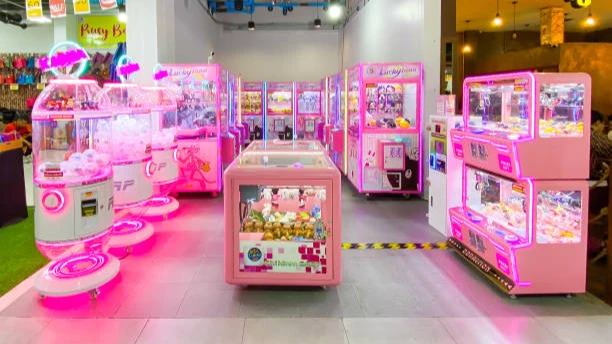
- Mall placement: a compact cluster of 4–8 machines can work well at a rail, atrium edge or other high-visibility location, with a mix of eye-catching full-size or themed cabinets and a small redemption point.
- Cinema lobby: medium cabinets and minis can be positioned along queue areas or other high-traffic spaces, supported by visible prize displays and a compact operating footprint.
Because the whole range ships from one factory, the mix can shift between size classes without requiring multiple suppliers. Unser full-size vs. mini vs. tabletop comparison covers the differences in footprint, prize capacity and other key specifications.
Vielleicht sind Sie daran interessiert arcade business startup guide.
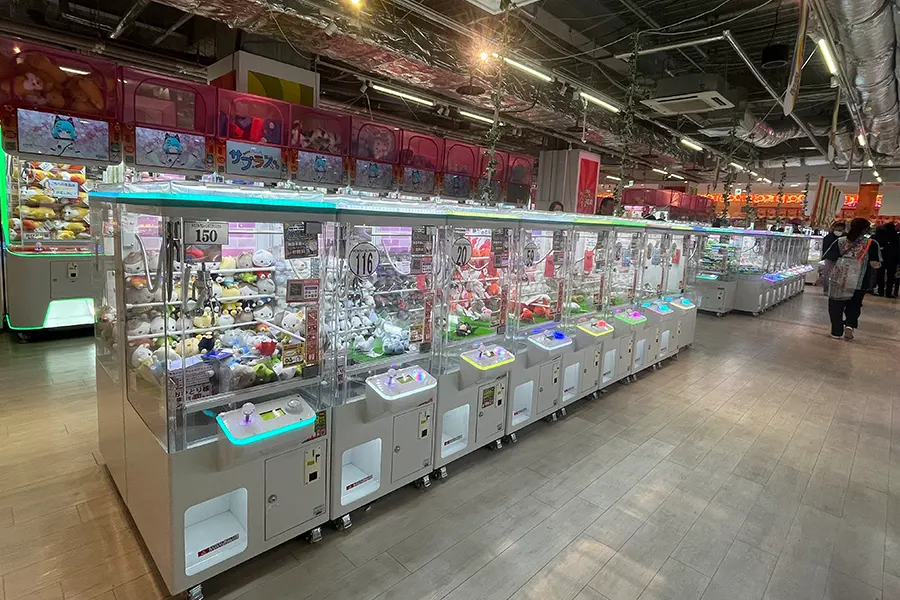
Plan Your Claw Machine Venue With a Custom Layout.
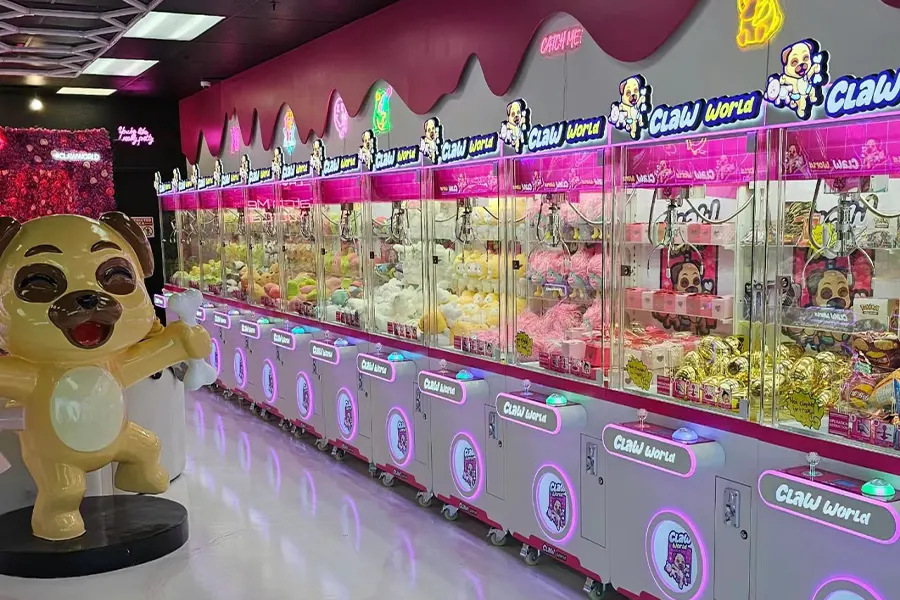
Preis, Payout and Payment Configuration
Once the machine mix is set, prize and payment configuration determines how each machine operates. Buyers should consider prize cost, redemption space and payment methods together rather than treating them as separate decisions.
Plan Prize Cost Around Each Machine
Start with the cost per play and the share of revenue allocated to prizes. Klein, frequently awarded prizes can support regular play on medium machines, while larger showcase prizes can be used with giant or feature machines to attract attention without being needed for every play.
Design the Redemption and Prize Area
The redemption area should be planned together with the machine layout. Allow space for the redemption counter, prize displays and storage, with a practical route for restocking. Popular prizes should remain visible from the game floor, while bulk inventory can be stored nearby without interfering with customer circulation.
Choose the Right Payment Configuration
Payment options can be selected according to the venue and target customers:
- Coin and bill acceptor for cash-based play
- Card and QR for cashless payments
- Mixed payment setups when both options are needed
Cashless systems can reduce coin-handling work but may add transaction fees, while cash-based systems require collection and handling. The payment setup should therefore balance customer convenience, payment costs and day-to-day operation.
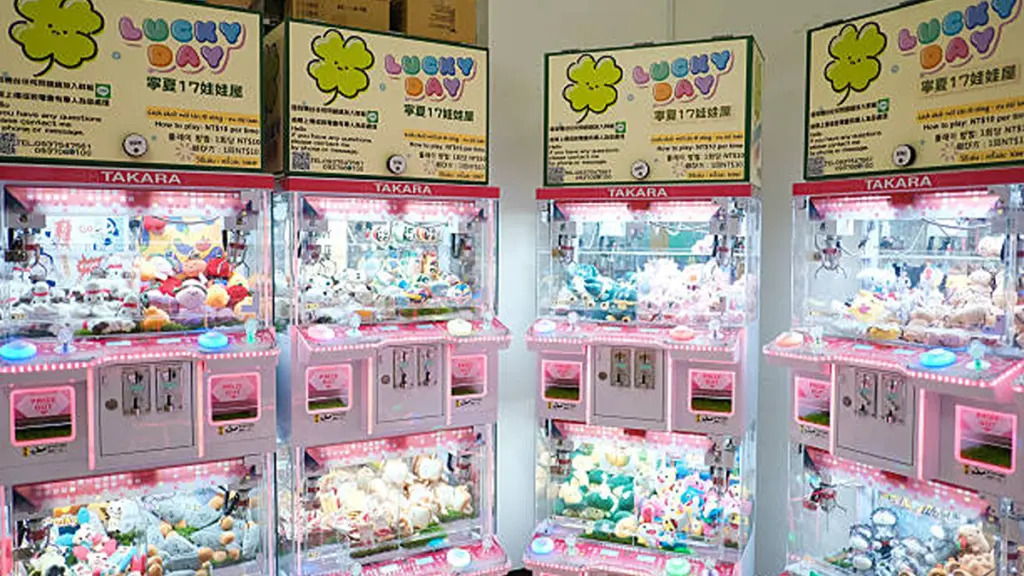
Operating Cost and Revenue per Square Metre
A floor plan is only half a business plan. Once the machine count and mix are set, buyers also need to check whether the space and equipment configuration make sense from an operating perspective.
Calculate the Main Operating Costs
The main costs to include in the operating model are:
- Rent or revenue share
- Strom
- Prize restocking
- Maintenance and parts
- Payment fees
These costs can vary with the venue, machine count and payment setup, so they should be estimated before finalizing the equipment plan.
Measure Revenue Against Floor Space
Revenue per square metre provides a useful way to compare how effectively the game floor is being used. Look at both revenue per square metre and individual machine productivity rather than focusing only on total revenue.
Adding more machines does not necessarily improve the result. If a position consistently underperforms, review its location, Maschinentyp, prize setup or surrounding mix and adjust the floor plan accordingly.
For a more detailed cost breakdown, Sehen Sie unsere claw machine operating costs guide. Unser commercial claw machine operator’s guide also covers the broader operating considerations for commercial venues.
Letzte Gedanken
Planning a claw machine arcade means connecting venue space, machine capacity, Layout, machine mix and operating costs before placing the equipment order. The aim is not simply to fit more machines into the floor, but to create a practical setup where customers can move and play comfortably while each machine has a clear role.
If you already have a venue or are still evaluating your space, a custom layout can make the planning process more practical. Tongru provides 2D and 3D Layout-Design based on your venue dimensions, helping you plan machine positions, traffic flow and equipment selection before production.
Häufig gestellte Fragen
How do I plan a claw machine arcade layout?
Start with the building, not the machines. Measure the gross area, reserve 30–40% for counters, redemption, storage and circulation, then divide the remaining game floor by 1.5–2 ㎡ per machine position to get capacity. Lay one continuous traffic loop with clear sightlines from the entrance, keep main aisles 120–150 cm, and place full-size anchors where they draw visitors through the whole floor. A free 2D/3D layout from a manufacturer turns that method into a buildable drawing.
How many claw machines do I need for my venue?
As a planning rule: convert 60–70% of gross area to game floor, then allow 1.5–2 ㎡ per standard machine position. That yields roughly 16–20 positions in a 50 ㎡ store, um 35 at 100 ㎡, Und 90+ in a 300 ㎡ claw-dedicated flagship — or 50–60 claw positions inside a larger mixed FEC. Working from your actual dimensions with a supplier layout is the reliable way to fix the final count.
What is a turnkey claw machine solution?
A turnkey solution delivers the whole venue from one supplier: whole-floor rendering and layout design, machine selection and pairing, custom prize redemption cabinets and fixtures, then production, delivery and after-sales from the same factory. Instead of coordinating a designer, a machine vendor, a cabinet maker and a freight forwarder, you approve one plan and receive one working floor.
How do I design a profitable claw machine store?
Profitability comes from three layout-controlled variables: visible play (sightlines that show machines being played from the entrance), a single loop with no dead ends (passing traffic for every cabinet), and dwell time (prize display and redemption placement that keep visitors inside). Match the machine mix to the venue type, price prizes against a target cost ratio per play, and model rent, power, restock and maintenance as a monthly worksheet before you sign anything.
Do suppliers provide free layout design?
A manufacturer with in-house design should. Send your floor dimensions and concept, and our three-person design team returns a free custom 2D/3D layout — machine positions matched to a real 28-model production range, aisle widths, power drops and redemption placement. If a supplier charges for a basic layout or cannot map the drawing to actual orderable machines, treat that as a signal about how the rest of the project will run.