

Buy the wrong claw machine claw types and the mistake shows up on opening day, not in the brochure. A claw that grips a candy bag but cannot close around a boxed plush turns a full cabinet into a dead corner. The claw choice decides which prizes a cabinet can sell and how often players win.
Single-claw, double-clamp, and UFO dual-scoop designs are not interchangeable. Each changes grip geometry, prize fit, and the maintenance bill. What follows maps each design to prize weight, so the claw decision follows your prize list instead of a sales sheet.
Anatomy of a Claw Assembly
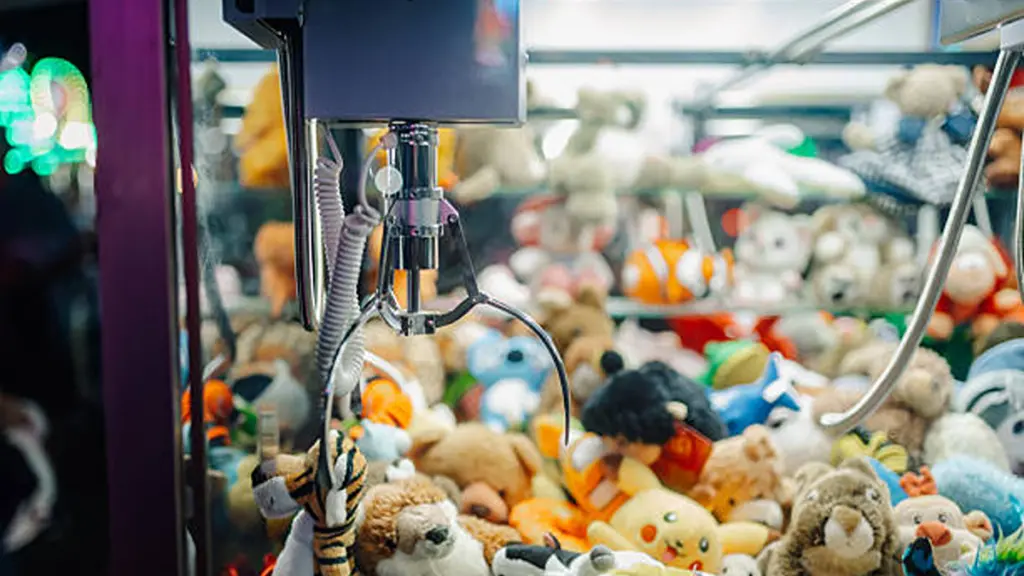
A claw assembly stacks four components: the coil, the linkage, the prongs, and the cable. The coil energizes and pulls a plunger; the linkage converts that vertical pull into the prongs’ closing motion; the cable suspends the whole assembly from the gantry. Prong tips vary — rubber tips grip slick prize surfaces, bare metal slides. Every lift and every win runs through this chain.
Two settings matter as much as the hardware. The mainboard’s claw strength setting controls the voltage the coil receives, and gantry speed controls how the cable pays out. Raise strength on the wrong prize and the claw crushes wrappers or tears plush fabric. Drop it too low and prizes slip mid-lift. The full part map sits in this site’s guide to the partes de uma máquina de garra.
One warning before the comparisons: a claw that opens mid-lift is rarely a coil problem. It is usually a cable or linkage that has stretched, and the prize drops a split second before the chute. Check the cable and linkage first, before touching the board. Bent prongs from a prize jam are the second common cause, and they show up as repeated near-misses on the same prize.
The single claw is the format players recognize first, and it remains the right default for one specific band of prizes.
Single Claw Mechanisms
The standard claw machine claw is a single-clamp design: it closes once. One coil, one linkage set, and three prongs do the entire job, which keeps the design cheap and the wear points few. That simplicity is the selling point. Fewer moving parts means fewer failures, and staff can swap a single-claw assembly with a screwdriver. Rubber-tipped prongs add friction on slick packaging, which matters once prizes come wrapped in film.
The trade-off is grip. Three slim prongs pinch a prize at three contact points, so light, compact items hold well and anything flat or heavy slips. Operators who load boxed goods into single-claw cabinets learn this fast. The claw grabs a box corner, lifts it a few centimeters, and the box slides out on the way up. Slick, flat packaging is the worst case: there is no edge for the prongs to dig into.
For candy cabs and small-prize venues the single claw is the better choice, not a downgrade. It pairs with the lightest strength settings and suits the prizes the cabinet was sized for. Check two things before ordering: the strength range in the mainboard menu, and whether staff can re-set it after a prize change. How those settings drive the coil is covered in this site’s explanation of how claw machines work.
When prizes move past a certain weight, one closing motion stops being enough. The double clamp exists to fix that exact failure.
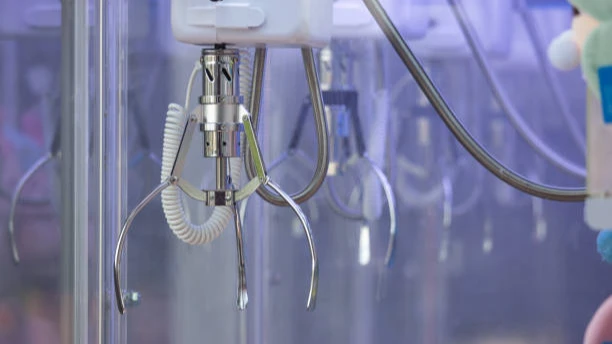
Double Clamp and Dual-Prong Mechanisms
A double clamp claw closes twice. The lower claw applies light force first and lifts the prize a short distance, then a second trigger fires a hard close. This two-stage sequence re-seats the grip under load, which is why the design carries heavier and boxed prizes with fewer drops. The full sequence is laid out step by step in this site’s guide to double clamps.
How the Second Clamp Works
The first stage is deliberately light. A hard first touch bounces light prizes away or punches through packaging. A soft close positions the prize without moving it. The second clamp then squeezes hard enough to compress the prize, and that compression is what holds a cardboard box through the lift and the ride to the chute.
What to check: whether the two stages use independent strength settings. Some boards tie both stages to one value. Others let the operator tune the second clamp separately. If you run mixed prize weights, ask for independent settings.
Double Clamp Versus Single Clamp
The verdict splits cleanly by prize. A single clamp wins for light prizes: fewer parts, lower repair cost, nothing to tune. A double clamp wins for boxed and heavier prizes, because the second squeeze does the carrying.
The double clamp’s cost is complexity. The second-stage mechanism adds linkage and a trigger to service, so maintenance points roughly double, and a fault now has two stages to diagnose. That is a fair price in a cabinet that must hold boxes. It is wasted money in a candy cab.
UFO cabinets grew out of the Japanese two-button skill tradition, and their claw came with it: two wide scoops instead of pinching prongs.
OVNI Dual-Scoop Claws
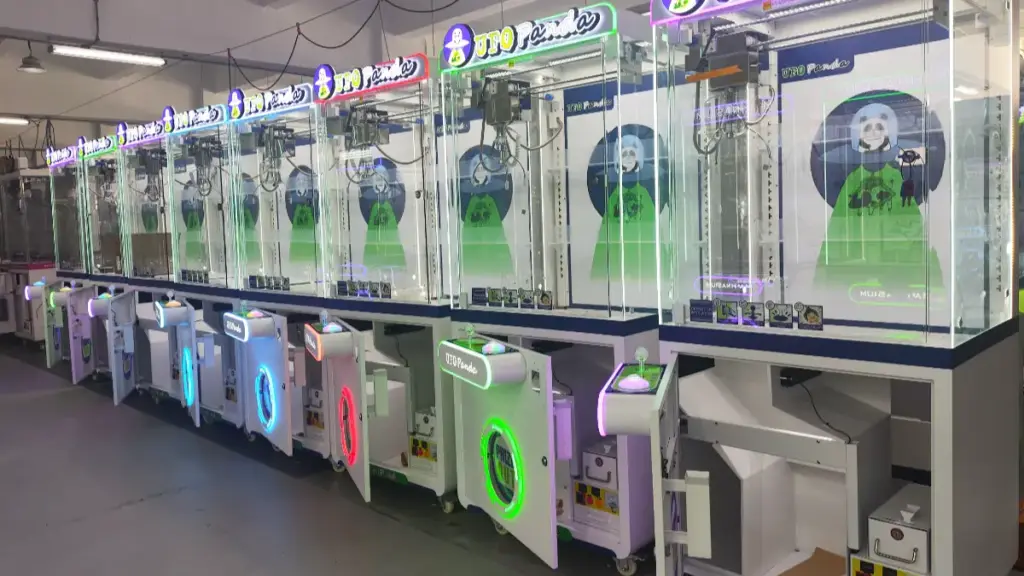
A UFO dual-scoop claw is two broad, shovel-shaped blades that close around a prize like a pair of cupped hands. Where a standard claw pinches at a few contact points, the scoops spread contact across the prize’s sides. Most Japanese UFO cabs on location run this design in a two-button, fixed-strength skill format. One button sends the claw forward, the other drops it, and the player’s aim does the rest. With strength fixed, the operator tunes the game through prize placement, not payout settings.
Scoop Geometry and Grip Coverage
Coverage is the design’s advantage. Large contact area spreads the load, so soft plush does not tear under its own weight. A prize that cannot be lifted can still be pushed, rolled, or dragged toward the chute. The UFO catcher claw is as much a pusher as a lifter. UFO play leans on that second option: nudging a big plush off a shelf edge counts as a win.
What to check: scoop width and depth against your largest prize. Two scoops that cannot close around the prize just slide off its sides. Measure the prize diameter, then confirm the closed scoop width clears it.
Best Prize Types for UFO Claws
Large soft prizes are the UFO claw’s natural fit: big plush, character pillows, cushions, and light boxed goods that can roll. For that mix the dual scoop beats a three-prong claw, and the choice is not close.
The reverse holds too. Small dense items — keychains, doce, compact figures — leave the scoops nothing to cup, and the cabinet starts dropping prizes on almost every play. A UFO cabinet loaded with a candy tray is the wrong pairing, whatever the cabinet’s price.
Prize weight is the fastest filter for choosing among claw machine claw types. Beginner operator guides teach three weight bands, and each maps to a different claw.

Matching Claw Type to Prize Weight
| Claw Type | Grip Surface | Prize Fit | Maintenance Load | Typical Use |
|---|---|---|---|---|
| Single claw | Three slim prongs, three contact points | Doce, chaveiros, mini plush | Low — one coil, one linkage | Candy cabs, small-prize venues |
| Braçadeira dupla | Two wide prongs, two-stage close | Boxed goods, mid to heavy plush | Higher — extra trigger and linkage | Mixed cabinets with boxed prizes |
| UFO dual scoop | Two scoop blades, full side contact | Large plush, cushions, light boxes | Medium — blades plus two-button wiring | Japanese-style UFO cabinets |
Lightweight Prizes
Lightweight prizes run 10–50 g in the guides — candy bags, chaveiros, small figures — and need 1–2 N of claw force. A single claw handles this band with the strength dialed low. Set the claw too strong and it pierces wrappers or flings the prize off the tray before the lift even starts.
Mid-Weight Plush
Mid-weight plush sits at 100–500 g and needs 2–5 N of force. This band is the single claw’s home turf. Compact plush compresses well between three prongs, and the settings stay simple.
Move toward the top of the band — a dense 500 g beanie or a slick-fabric plush — and the single claw starts dropping prizes. That is the signal to switch to a double clamp, whose second squeeze re-grips under load.
Heavy Boxed Prizes
Heavy boxed prizes pass the 500 g mark and leave the single claw behind. A cardboard box offers only corner edges to pinch, and a single closing motion slips off on the way up. The double clamp is the answer here, and the second stage is what carries the box. Keep those boxes sealed flat: loose flaps give the second squeeze nothing solid to press against.
Two checks before ordering. Primeiro, compare the box’s shortest side with the claw’s closed width: a claw that cannot close around the box cannot hold it. Segundo, treat very large but light boxes as the exception — UFO scoops can roll those toward the chute but cannot lift a dense, heavy box. When you spec the cabinet, start from the prize list on the Crane Prize category page.
Claw assemblies are consumables. The budgets below come from parts guides, and they set the ceiling on what a repair should cost.
You may be interested in: Idéias criativas de premiação da máquina de garra para todos os jogadores
Replacing and Maintaining Claw Assemblies
Parts guides commonly list a 2–6 year working life for a claw assembly, with replacement units running $30–200. The motor above it lasts 3–8 years at $25–250, and the steel cable or belt wears out every 1–4 years at $5–60. The cable is the part that fails first and the part operators forget to stock. Motors usually outlive two cable replacements, which is why the cable shelf is the one to keep filled.
Keep this minimum kit per cabinet:
- A spare claw assembly — $30–200 now beats a cabinet down during a weekend rush.
- Two spare cables or belts, the shortest-lived parts at $5–60.
- A spare coil for single-claw cabinets, where the coil does all the gripping.
Parts guides also carry a blunt replacement rule: when a repair quote passes 50% of the machine’s value, replace the machine. Apply it at quote time, not after the bill lands. A worn cable at the low end of the $5–60 range is routine; a motor-and-linkage rebuild on an old cabinet usually is not.
Buyers can push most of this risk onto the supplier at purchase time. Tongru’s crane range spans 28 SKUs, with real photo assets covering standard claws, UFO claws, and ten-claw machine claws. Machines ship with a one-year warranty, manutenção vitalícia, and paid spare-part dispatch after that. The mainboards are developed in-house on imported ICs, which keeps claw strength settings stable across swaps. Order a spare assembly with the machine, and confirm the supplier will stock that exact claw in later years.
Three claw designs, three prize bands, one decision rule. The claw follows the prize list, not the other way around.
Considerações Finais
Claw machine claw types should match the size, peso, and variety of prizes you plan to stock. Single claws work well for candy and small toys, while double-claw mechanisms provide a more secure grip on boxed and heavier items. UFO claws are better suited to large plush toys. For venues with mixed prize selections, using two cabinet formats can cover a wider range of prizes.
Before placing an order, weigh your ten best-selling prizes and record their dimensions. Visita Tongru to learn more about its claw machine solutions, then explore its Crane Prize Machines to compare available cabinet formats.
Perguntas frequentes
What is the difference between a single claw and a double clamp?
A single claw closes once. A double clamp closes lightly, lifts, then squeezes hard a second time. The second-stage grip carries heavier and boxed prizes; the single claw suits light ones.
Which claw type works best for plush toys?
Mid-weight plush of 100–500 g grips well with a standard single claw. Large plush and character pillows suit UFO dual-scoop claws, which cup the prize instead of pinching it.
Can claw assemblies be swapped between machine models?
Often within one maker’s crane range, since mounts and connectors are shared. Cross-brand swaps need wiring and strength checks. Confirm compatibility with the supplier before ordering a spare.
How often should claw assemblies be replaced?
Parts guides commonly list 2–6 years, with units at $30–200. Replace when prongs bend, the coil weakens, or the cabinet drops prizes at a rising rate.
What is a UFO catcher claw?
Two wide scoop-shaped blades that close around a prize, standard on Japanese two-button UFO cabinets. The scoops cup large plush and can push or roll prizes toward the chute instead of lifting them.
Does the claw type affect a machine’s payout rate?
Sim. Grip coverage and claw force decide how often a prize reaches the chute, so operators set payout and strength together per prize type. A scoop claw on small items rarely pays out.