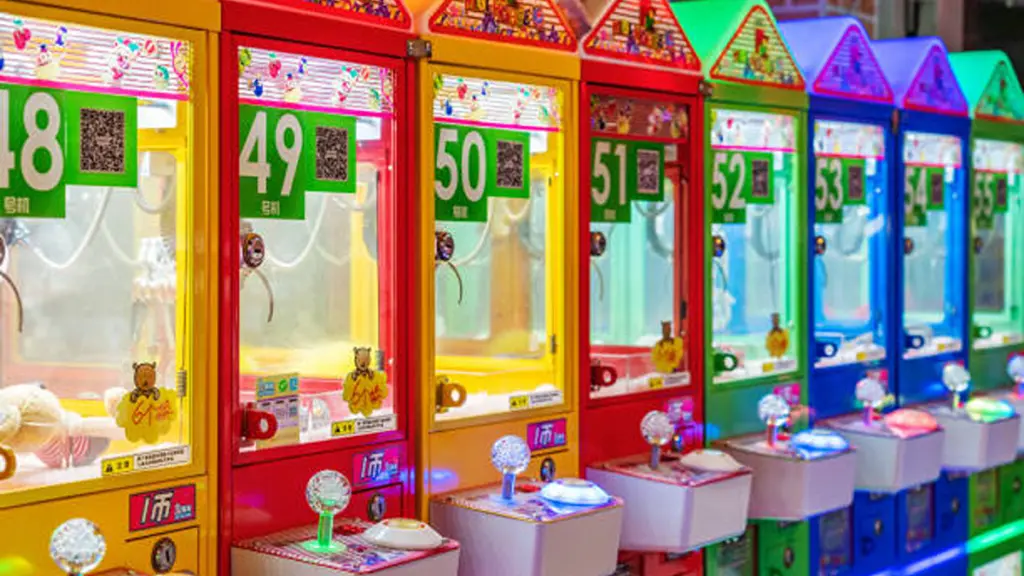


Claw machine size directly affects how many machines your venue can accommodate, how players move through the space, and what type of prizes each unit can support. Para propietarios de arcade, FEC operators, and other commercial buyers, the challenge is finding a practical balance between floor space, machine capacity, y potencial de ingresos. This guide compares mini, superficie de la mesa, medio, full-size, and life-size claw machines, with clear dimensions, footprint estimates, and venue recommendations to help you plan the right machine mix for your space and business needs.
Why Machine Size Decides Your Floor Plan
Machine size is the first spec that constrains everything else: how many units fit, which prize sizes you can load, how much power the floor draws, and how much each square meter earns. Yet most buyers pick machines by photo and price first, then discover the units crowd their aisles or sit lost in an oversized hall.
Across a commercial range of 28 claw machine models, four size classes cover virtually every venue use case: mini and tabletop, medium single-player, full-size multi-player, y gigante & life-size. Each class trades footprint against prize capacity, player throughput and visual impact. This guide compares them on real dimensions, so you can match the machine to the floor plan before you order — not after.
If you are planning a whole store rather than adding single units, read this together with our claw machine store layout guide, which turns these size choices into a working floor plan.
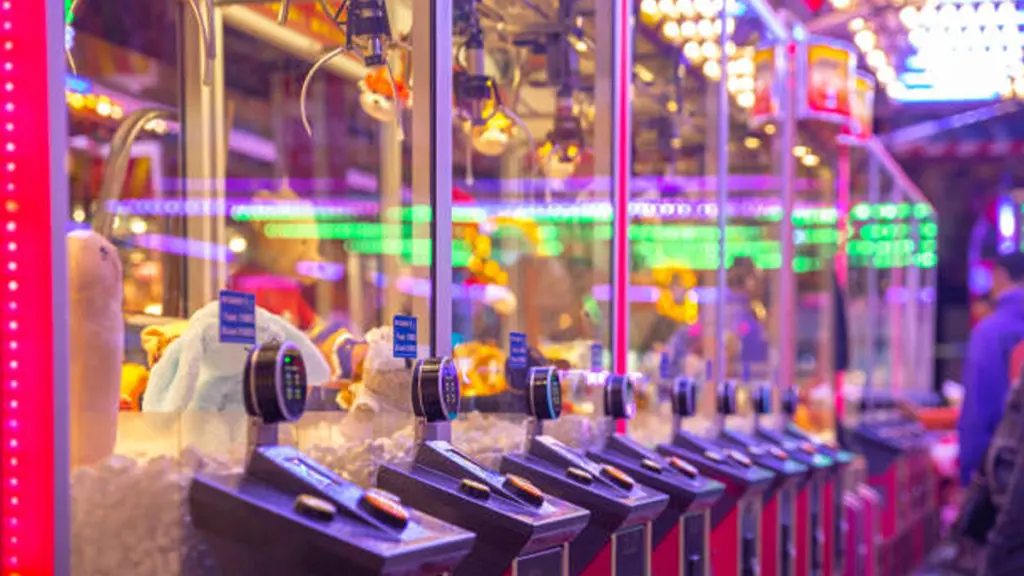
Full-Size Claw Machines: Presence, Capacidad, Ganancia
Full-size machines are the anchors of a commercial floor. In a typical 28-SKU commercial range, full-size multi-player units — dual-player cabinets and four-player configurations — run roughly 1.6 a 2.0 meters wide, with footprints between 2.5 y 3.3 ㎡ per cabinet. The largest life-size units go far beyond that: a life-size “real person” claw machine measures about 3.5 m wide × 3.0 m deep × 2.8 m tall, claiming over 10 ㎡ of floor on its own.
What that size buys you:
- Prize capacity. Deep cabinets swallow large plush and boxed prizes that physically cannot fit in compact cabinets, which lets you merchandise premium items at premium play prices.
- Multi-player throughput. Two to four play positions per cabinet mean one footprint serves several players at once — the main reason busy stores favor full-size units for their high-traffic zones.
- Visibilidad. A 2.8 m life-size machine is visible across a mall atrium. Operators use one or two giants as landmarks, then fill the surrounding floor with standard units.
The trade-offs are just as real: full-size units need wider aisles (plan for generous clearance on at least the front face), higher ceilings, and they concentrate spend in fewer, larger assets. They also sit at the top of the price band — a life-size unit costs several times an entry mini model. For halls that can fill them with players, they earn their footprint; for tight floors, they crowd out plays.
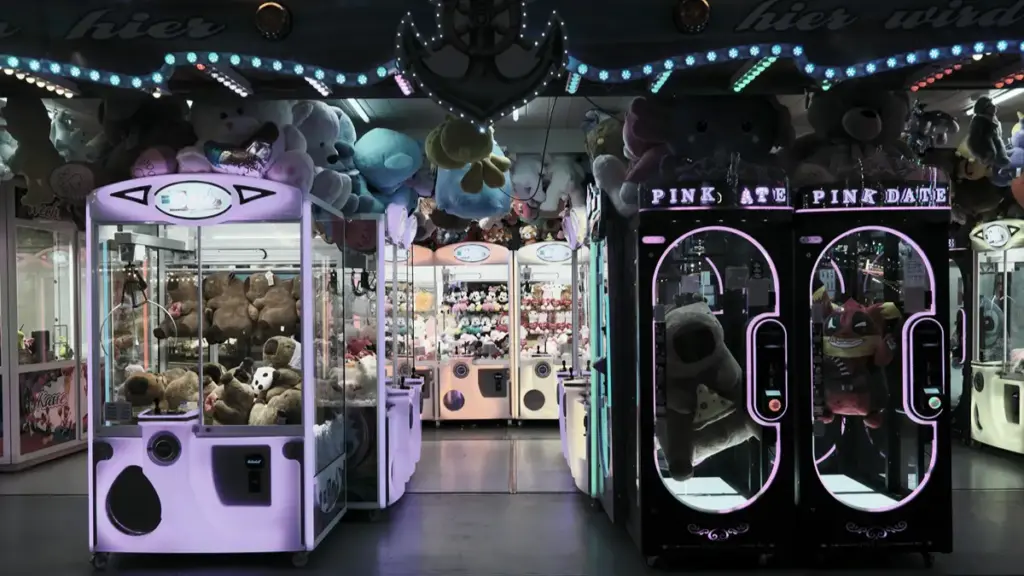
Medium Commercial Claw Machines: The Store Workhorse
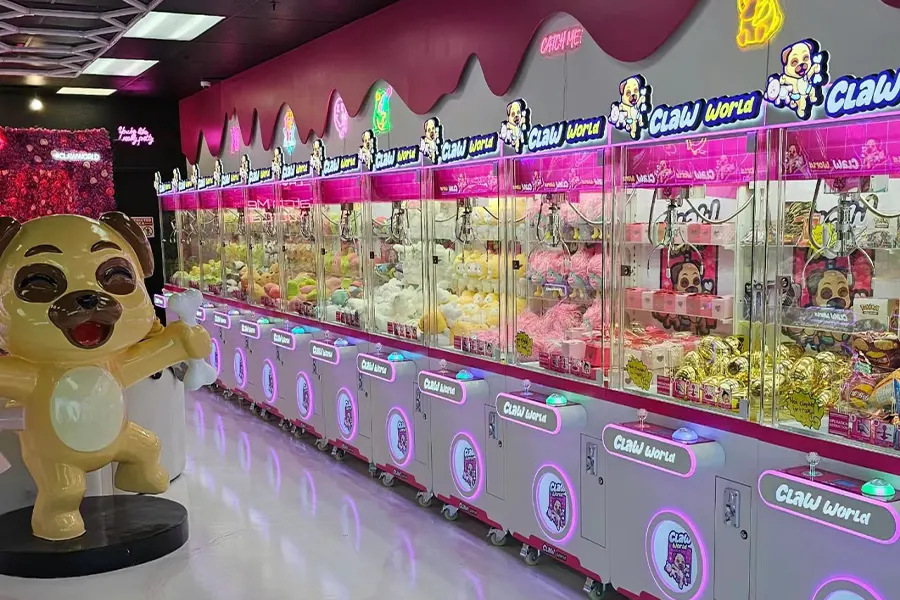
The medium class — standard single-player cabinets around 800 mm wide × 800 mm deep × 1.9 m tall, with dual-player versions near 2 m wide — is where most store floors do their work. In the 28-model range this class is the deepest: single-player cabinets with or without storage bases, licensed-theme units, and key-master style machines all share this envelope.
Alrededor 0.65 ㎡ of cabinet footprint per single-player unit makes the math simple. Once you add the player standing zone in front — roughly a meter of clear depth — a practical planning figure is 1.5 a 2 ㎡ per machine position. That is the number to use when you convert floor area into machine count.
Why operators default to this class:
- Density with comfort. You can build continuous walls of machines without the crowding that full-size rows create.
- Prize flexibility. Cabinet interiors handle mid-size plush, boxed items and gift merchandise — the staple inventory of a claw machine store.
- Mix-and-match merchandising. Because dozens of medium SKUs share one footprint, you can rotate themes and game types (grúa, key claw, barber cut) without redrawing the floor plan.
Browse the medium claw machine category to see how many cabinet styles share this standard envelope.
Mini and Tabletop Claw Machines: Small-Footprint Plays
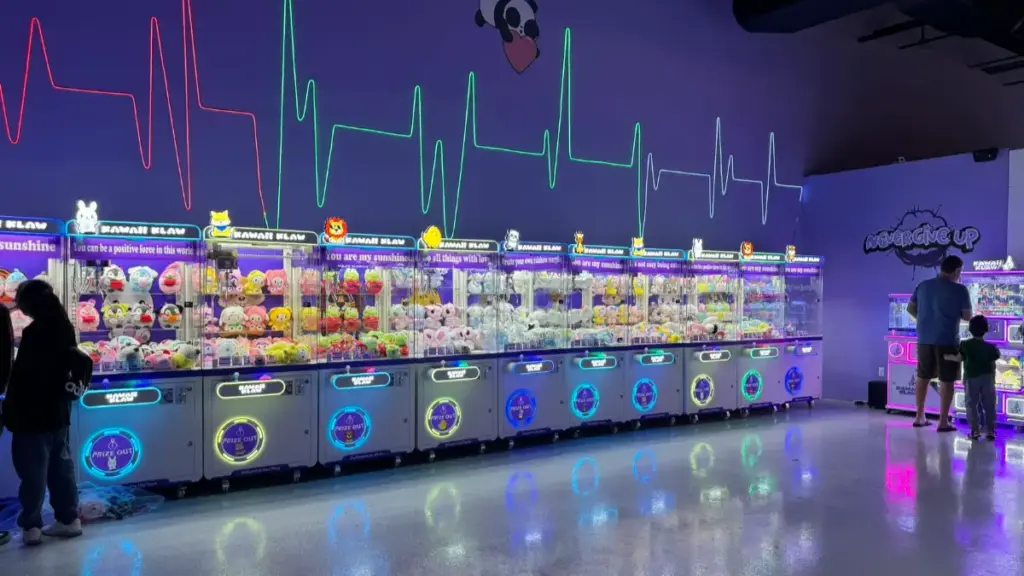
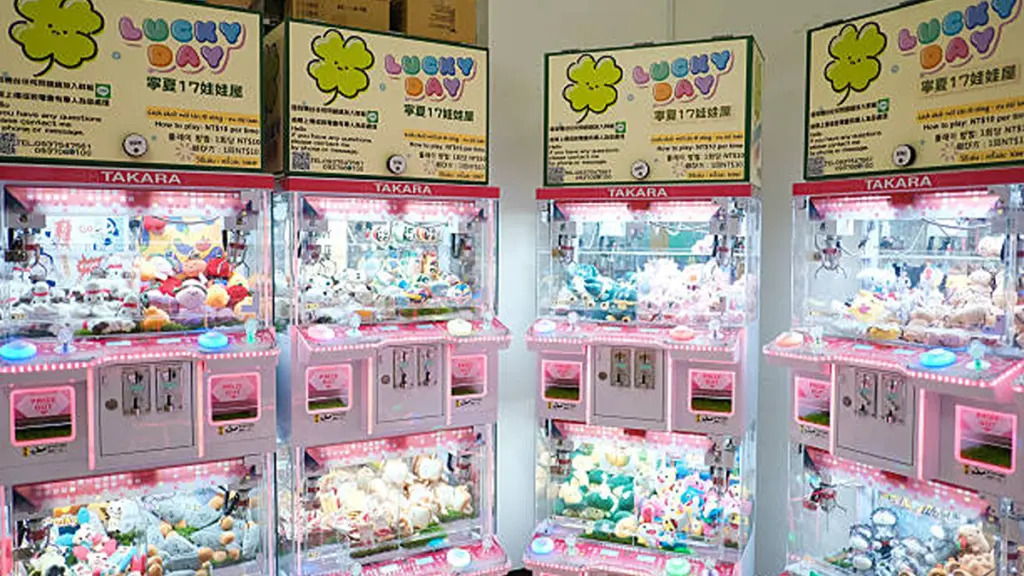
Mini claw machines are the narrowest class in the range: at roughly 360 mm wide and 455 mm deep — under 0.2 ㎡ of footprint — a column of minis fits where one standard cabinet would not. Versions in the range run about 1.6 m tall, slim enough for counter rows, window lines and aisle ends.
The economics of mini machines work differently:
- Lowest entry price. Mini units occupy the entry point of the price band, which makes them the cheapest way to test a location before committing to a full fit-out.
- Impulse placement. Counters, checkout lines and dead corners earn again when a mini machine occupies them. Tabletop versions mount on existing furniture.
- Small-prize strategy. Compact claws and cabinets suit small plush, keychains and candy — low-cost restock that matches impulse play prices.
Do tabletop claw machines make money? Yes — when the location already has foot traffic and the prize cost stays low. What minis do not do is anchor a store: no visibility across a hall, small prizes, single-player throughput. Strong floors treat them as filler and testing tools around a medium and full-size core. See the mini claw machine category for compact models.
Plan the Right Machine Mix for Your Space.
Size × Footprint × Capacity Comparison
The table below condenses the four classes into one planning reference, using typical dimensions from a 28-model commercial range:
| Size Class | Typical Envelope (W×D×H) | Footprint per Unit | Machines per 10 ㎡ of Game Floor | Best Use on the Floor |
|---|---|---|---|---|
| Mini / Tabletop | ~360 × 455 × 1,620 milímetros | Under 0.2 ㎡ | 10+ (counter rows) | Impulse filler, counters, testing new locations |
| Medio (single-player) | ~800 × 800 × 1,900 milímetros | ~0.65 ㎡ | 5–6 with comfortable aisles | The working core of any store floor |
| Full-Size (multi-player) | ~1,600–2,000 mm wide | ~2.5–3.3 ㎡ | 2–3 | High-traffic anchors, premium prize walls |
| Gigante / Life-Size | up to ~3,500 × 3,000 × 2,800 milímetros | 10+ ㎡ | 1 | Landmark attraction, photo magnet, large prizes |
Read the fourth column as a planning density, not a packing limit — it already allows normal player space. Pushing beyond it trades player comfort for unit count, and comfort is what keeps replay rates up.
Which Size Fits Your Venue
Claw machine store (dedicated). A medium-dominant floor with one or two full-size anchors. Roughly 70–80% medium single-player units, 10–15% full-size multi-player, the balance minis at the counter and window. Nuestro claw machine stores page covers this model in depth.
Family entertainment center. Full-size and giant machines pull families toward the claw zone; medium units sustain the zone’s depth. Giants double as photo landmarks — see how claw zones anchor arcades and FECs.
Mall kiosk or island. Mini and medium units only. A kiosk footprint measured in square meters, not tens of meters, cannot absorb full-size aisles — density and rotation win here.
Counter, café or retail add-on. Tabletop and mini machines monetize existing traffic with zero redesign. Start with one or two units, read the play data, then scale.
Brand store or promotional activation. Custom-branded medium and full-size units, often licensed-theme cabinets, placed where the brand story needs a spectacle. Custom graphics and cabinet finishes are standard options at this size — details in our layout design service.
From Size Choice to Machine Count
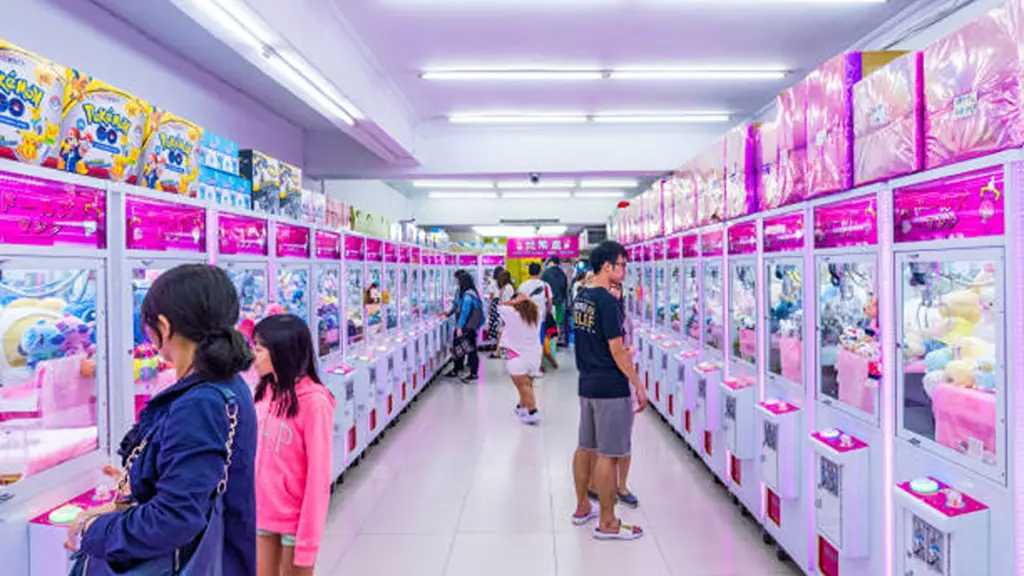
Once the size mix is decided, the count follows from three inputs: gross floor area, the share devoted to games (a typical store plans 60–70% of gross area as game floor once counters, prize redemption, storage and circulation are deducted), and the per-position allowance from the table above — 1.5 a 2 ㎡ per standard machine.
Worked example: a 100 ㎡ store with 65% game floor has ~65 ㎡ to fill. En 1.8 ㎡ per position that is roughly 35 machine positions before adjustments. Deduct two positions for a full-size anchor pair, add a mini row on the counter, and the order takes shape with numbers behind it instead of guesses.
This is exactly the calculation a supplier should run with you before quoting. We do it as part of a free 2D/3D layout design — you send the floor dimensions, and the returned plan shows machine count, mix, aisle widths and power placement for your actual space.
Pensamientos finales
The best claw machine size depends on more than the cabinet itself. Floor area, player flow, capacidad de premio, venue type, and the number of machines you plan to operate all affect the final machine mix. Mini and tabletop units work well for compact spaces and add-on locations, while medium and full-size machines can support higher-capacity commercial game floors.
Máquina de garra Tongru offers a wide range of sizes and configurations to help commercial buyers build a practical setup for their venue. Explore our claw machines by size to find models that fit your space and business needs.
Preguntas frecuentes
How big is a full-size claw machine?
Full-size multi-player cabinets typically run 1.6–2.0 m wide with footprints of 2.5–3.3 ㎡. Life-size units reach about 3.5 m wide × 3.0 m deep × 2.8 m tall. Always confirm each model’s exact dimensions against your aisle and ceiling plan before ordering.
What is the difference between mini and full-size claw machines?
Mini machines occupy under 0.2 ㎡ (apenas 360 mm wide) and suit counters, small prizes and impulse play. Full-size machines occupy 2.5 ㎡ or more, accept large prizes, serve several players at once and act as visibility anchors. Most commercial floors use minis as filler around a full-size or medium core.
Which claw machine size is most profitable?
No single size wins everywhere. Profit per square meter favors medium single-player machines in high-traffic stores; full-size units lead where large premium prizes justify higher play prices; minis win in leftover spaces that would otherwise earn nothing. Profitability follows from matching size to location traffic and prize strategy, not from any one class.
How much floor space does a claw machine need?
Plan 1.5–2 ㎡ per standard machine position — cabinet footprint plus the player zone in front. A single-player medium cabinet takes about 0.65 ㎡ itself; full-size multi-player units need 2.5 ㎡ plus wider front clearance. For a whole store, start from 60–70% of gross floor area as usable game floor and divide by the per-position allowance.
Should I use different claw machine sizes in the same arcade?
Sí. A mixed machine layout can help balance floor-space efficiency, visual impact, capacidad de premio, and player flow. Medium machines can form the core of the game floor, while mini or tabletop units fill smaller areas and full-size or life-size machines create visual focal points. The ideal mix depends on the venue and operating model.