

Payment systems affect how customers play claw machines, how operators manage transactions, and how businesses track revenue. Coin-operated, card-based, and app-based systems each offer different advantages in terms of setup costs, payment convenience, and day-to-day operations.
For arcade owners, family entertainment centers, and other commercial operators, understanding these differences helps identify a payment system that fits their business model, target customers, and operating requirements.
How Payment Systems Affect Claw Machine Revenue
Payment systems can influence how easily customers start playing, how operators run promotions, and how much time and money businesses spend managing transactions.
Payment Convenience and Game Participation
Simple payment processes make it easier for customers to start playing. Coin-operated machines require suitable coins or tokens, while card and app-based systems offer alternatives for customers who prefer cashless payments. In high-traffic locations, payment speed and availability can affect queues and the number of customers able to use the machines.
Prepaid Credits, Promotions, and Repeat Visits
Rechargeable cards and app-based systems can support bonus credits, loyalty programs, and promotional offers. Operators can use these features to encourage repeat visits or larger top-ups, depending on the system’s capabilities. The results depend on customer preferences, promotion design, and how often customers return.
Cash Handling, Downtime, and Operating Costs
Coin-operated machines require cash collection, counting, and periodic servicing of coin mechanisms. Digital payment systems can reduce manual cash handling but may involve transaction fees, software costs, connectivity requirements, and additional technical maintenance. Payment interruptions can also affect machine availability, so operators should consider both ongoing expenses and the reliability of the payment system when evaluating profitability.
How Do Coin, Card, and App Payment Systems Work?
Commercial claw machines use different payment systems to process game credits, connect payment devices, and manage transactions across one or more machines.
Coin-Operated Claw Machines
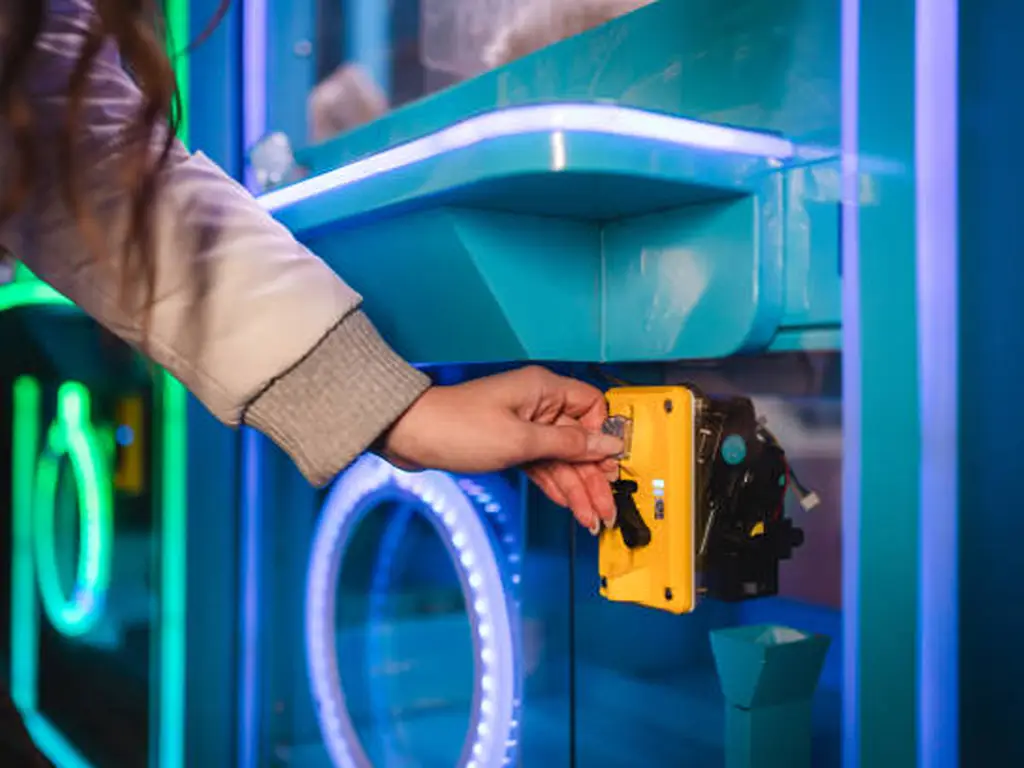
Coin-operated claw machines use a coin acceptor to check whether an inserted coin or token meets the machine’s requirements. Once the mechanism accepts the payment, it sends a signal to the control board, which starts the game or adds the required credits.
Operators should check which coin types, token sizes, and denominations the machine supports before purchasing. If a venue uses its own tokens, the supplier must confirm that the coin mechanism can recognize them. Operators also need access to the coin box for cash collection and the coin mechanism for cleaning, testing, and maintenance.
Card Payment Systems Work in Claw Machines
Card payment systems allow players to use rechargeable arcade cards, RFID cards, or other stored-value cards to pay for games. A compatible card reader checks the card and deducts the required credits from the player’s balance. Depending on the setup, customers may add credits at a separate kiosk, service counter, or supported online platform.
For venues with multiple claw machines, a centralized system can connect card readers to a shared credit platform. Players can then use the same card across compatible machines without loading credits separately on each one. Before ordering, operators should confirm whether the machines support the required card technology and whether the supplier provides the necessary readers, software, and integration services.
App and QR Code Payments Work in Claw Machines
App-based and QR code payment systems let players use supported mobile payment methods instead of inserting coins or presenting a physical card. The payment process depends on the system installed on the machine.
- Direct payment: Players scan a QR code or use a supported mobile wallet to pay for a game. The system confirms the transaction before the machine starts.
- App-based credits: Players add funds to an account and use the app to pay with stored credits. The system deducts the required amount when they play.
These options have different technical requirements. Direct payments may need a payment gateway and a reliable way to send transaction confirmations to the machine, while app-based credits may require account management and credit-tracking software. Operators should confirm which payment providers work in their target market and whether the machine supports the required hardware, software, and network connection.

Coin vs. Card vs. App Payment in Claw Machines: Key Differences
Payment systems differ in setup costs, customer convenience, and reporting capabilities. Comparing these factors helps operators identify a suitable option for their budget and business needs.
Initial Setup and Ongoing Costs
Each payment method has different hardware and maintenance requirements. Coin systems need coin acceptors, card systems may require readers and credit platforms, and app-based payments may need QR code displays and payment integration.
The table below outlines common cost factors. Actual expenses depend on the machine configuration, payment provider, and venue requirements.
| Cost Factor | Coin Payment | Card Payment | App and QR Code Payment |
|---|---|---|---|
| Initial setup | Coin acceptor and coin collection mechanism. | Card readers, cards, and possibly a central credit system. | QR code display or reader, payment integration, and possibly software. |
| Transaction costs | Usually no digital payment processing fees, although cash handling involves labor costs. | May include transaction processing fees or platform charges. | May include payment gateway fees, transaction fees, or platform charges. |
| Ongoing maintenance | Coin mechanism servicing and cash collection. | Card reader maintenance, card replacement, and system support. | Software updates, connectivity, and payment system support. |
Ask suppliers to itemize hardware, installation, transaction, software, and maintenance costs. Comparing these expenses over the machine’s expected service life helps estimate the total cost of ownership.
Customer Convenience and Spending Experience
The payment process affects how easily customers can start playing. Coin systems require coins or tokens, card systems use stored credits, and app-based systems may support mobile wallets or digital balances. The best fit depends on local payment habits and customer access.
Top-up requirements also influence the experience. Prepaid cards and app balances support repeat play, while direct QR code payments may let customers pay for individual games. However, requiring an initial top-up, app download, or account registration can create extra steps for new customers.
Consider local payment preferences, mobile network coverage, and customer familiarity with each method, especially in venues serving tourists or different age groups.
Revenue Tracking and Operational Management
Payment systems also differ in how they record sales and track machine activity. Coin systems often require manual cash collection and counting, while digital systems can record transactions automatically. Reporting details depend on platform features and machine integration.
| Management Task | Coin Payment | Card Payment | App and QR Code Payment |
|---|---|---|---|
| Sales records | Usually relies on cash counts and machine counters. | May record card transactions and credit usage through a connected platform. | May provide digital transaction records through the payment provider or app. |
| Machine-level reporting | May require manual checks or separate counters. | Available when the system links transactions to individual machines. | Available when the payment and machine systems support this integration. |
| Credit and promotion management | Usually requires manual processes or separate equipment. | May support shared credits, bonus offers, and card-based promotions. | May support digital credits, promotional offers, and app-based campaigns. |
Operators can use these records to compare machine activity and investigate differences in sales. For example, lower paid-play counts may prompt checks of machine condition, location, game settings, or payment functionality.
You may be interested in: Claw Machine Operating Costs: Rent, Power, Restock, Maintenance
Find the Right Payment System for Your Claw Machines
The right payment system depends on your target market, venue type, and operating needs. Whether you need coin-operated, card-based, QR code, or hybrid payment options, Tongru can help you explore suitable configurations for your claw machines. Contact our team to discuss your project requirements and payment options.
Which Payment System Fits Your Business Model?
Your venue type, customer payment habits, and operating needs help determine which payment system best suits your claw machines.
Small Arcades and Independent Claw Machine Operators
For small arcades and independent operators, coin-operated claw machines offer a straightforward payment setup with limited infrastructure. Players insert coins or tokens for each game, making this option practical for locations where customers regularly use cash.
Operators should consider the time required for cash collection, coin replenishment, and mechanism maintenance. As the number of machines grows, these tasks can increase the workload. If customers at the target location prefer cashless payments, adding card or mobile payment options may improve convenience.
Shopping Malls and Family Entertainment Centers
Shopping malls and family entertainment centers often operate multiple claw machines in one venue. A card-based system can let players load credits onto one rechargeable card and use it across compatible machines. Depending on the platform, operators may also manage promotions and transaction records centrally.
This setup can support bonus-credit offers, loyalty programs, and repeat visits. However, operators should check whether the system supports all intended machines and compare installation and service costs with expected usage. A centralized platform is more useful when its management features meet the venue’s actual needs.
Standalone Machines and Cashless-Oriented Markets
Standalone claw machines in shopping centers, cinemas, and other public spaces may benefit from app-based and QR code payments, particularly where customers commonly use mobile wallets. These options allow players to pay without carrying coins or purchasing a physical arcade card.
Payment speed matters in these locations. Systems that require app downloads or account registration may add steps for casual players, while QR code payments through familiar services may offer a simpler process.
Before purchasing, operators should confirm local payment support, network requirements, transaction fees, and how the machine receives payment confirmation. Where customers have different payment preferences, a hybrid payment system that accepts both cash and cashless payments may provide greater flexibility. The additional hardware and integration costs should fit the machine’s location and expected revenue.

Should You Choose One Payment Method or a Hybrid System?
The choice between a single payment method and a hybrid system depends on customer preferences, venue requirements, and operating costs.
When a Single Payment Method Is Sufficient
A single payment method may be enough when most customers prefer the same payment option and the system meets daily operating needs.
- Lower operating complexity: Fewer payment devices and integrations to maintain.
- Simpler management: Easier payment handling and troubleshooting.
- Suitable locations: Small arcades or venues with clear customer payment preferences.
Benefits and Trade-Offs of Hybrid Payment Systems
A hybrid payment system accepts multiple payment methods, such as coins, cards, and QR code payments. It can serve more customers but requires additional investment.
- Greater flexibility: Accommodates customers with different payment preferences.
- Higher setup costs: Additional readers, hardware, or payment integrations may be required.
- More maintenance: Operators may need to manage multiple payment systems and resolve compatibility issues.
Choose a hybrid system when customer demand justifies the added costs. If one payment method already meets most customers’ needs, a single system may be more practical.
What to Check Before Buying Claw Machines with a Payment System
Before ordering claw machines, check payment compatibility, local payment requirements, and the supplier’s technical support to avoid unexpected installation and operating costs.
Hardware Compatibility and Payment Integration
Confirm which payment methods the machine supports and whether the system needs additional hardware or integration.
- Supported payment methods: Check compatibility with coin acceptors, card readers, QR code modules, or combined payment systems.
- Control-board compatibility: Confirm that the payment system works with the machine’s control board and ask whether existing machines can be retrofitted.
- Integration requirements: Check whether installation requires extra wiring, software, or third-party payment equipment.
Local Payment Support and Connectivity
Payment requirements vary by market, so confirm that the system supports the currencies and payment services your customers use.
- Payment coverage: Verify supported currencies, local payment providers, and transaction fees.
- Network requirements: Check whether the system needs Wi-Fi, mobile data, or a wired connection to process payments.
- Transaction processing: Confirm how payments are authorized and how the machine responds if the network connection fails.
Supplier Customization, Maintenance, and Technical Support
A supplier’s support can affect installation time, machine uptime, and future upgrades. Before ordering, confirm the following:
- Customization: Ask which payment configurations the supplier can install before delivery.
- Maintenance and spare parts: Check the availability of replacement readers, coin acceptors, and other payment components.
- Technical support: Confirm troubleshooting procedures, remote assistance, and upgrade options for future payment requirements.
Explore latest claw machines to compare available models before confirming your payment system requirements.
Final Thoughts
The right payment system can affect customer convenience, machine management, and operating costs. Coin-operated claw machines may suit venues with regular cash users, while card and app-based payments support cashless transactions. A hybrid payment system can accommodate different customer preferences, but it also adds hardware and maintenance requirements. Before placing an order, consider your target market, expected usage, and payment infrastructure to find a setup that fits your business needs.
As a claw machine manufacturer, Tongru can help you explore suitable payment configurations and machine options for your target market. Contact our team to discuss your project requirements and available customization options.
Frequently Asked Questions
What payment systems do claw machines use?
Claw machines use three main payment systems: coin and token mechanisms, card and cashless readers, and app or QR code-based payment. Some machines support multiple payment methods simultaneously, such as a coin slot combined with a card reader, to serve a broader range of customers.
Are cashless claw machines worth it?
Cashless claw machines are worth it in markets where card or mobile payment adoption is high. They reduce collection labor, enable remote monitoring, and expand your customer base to players who do not carry coins. However, they introduce per-transaction fees and require network connectivity, which may not suit all venues or regions.
Can I convert a coin claw machine to card payment?
In most cases, yes. If the machine’s control board has a compatible interface for card reader integration, you can add a card payment module without replacing the entire machine. Boards developed in-house by the manufacturer typically support this kind of upgrade. Verify compatibility with your machine supplier before purchasing a card reader.