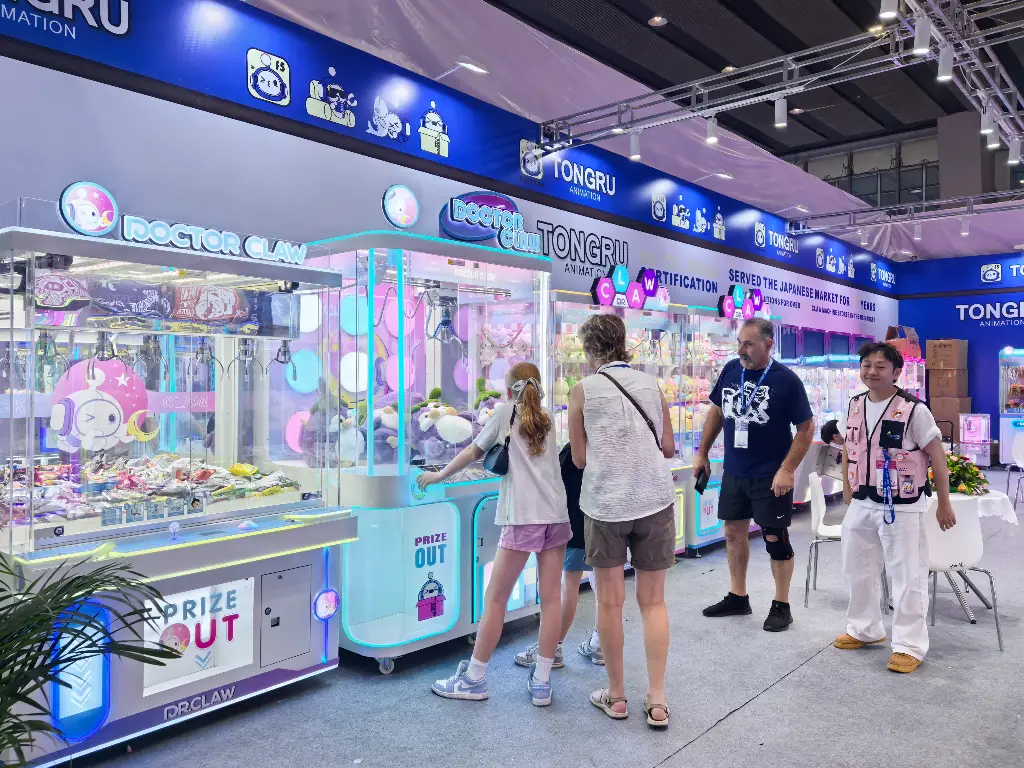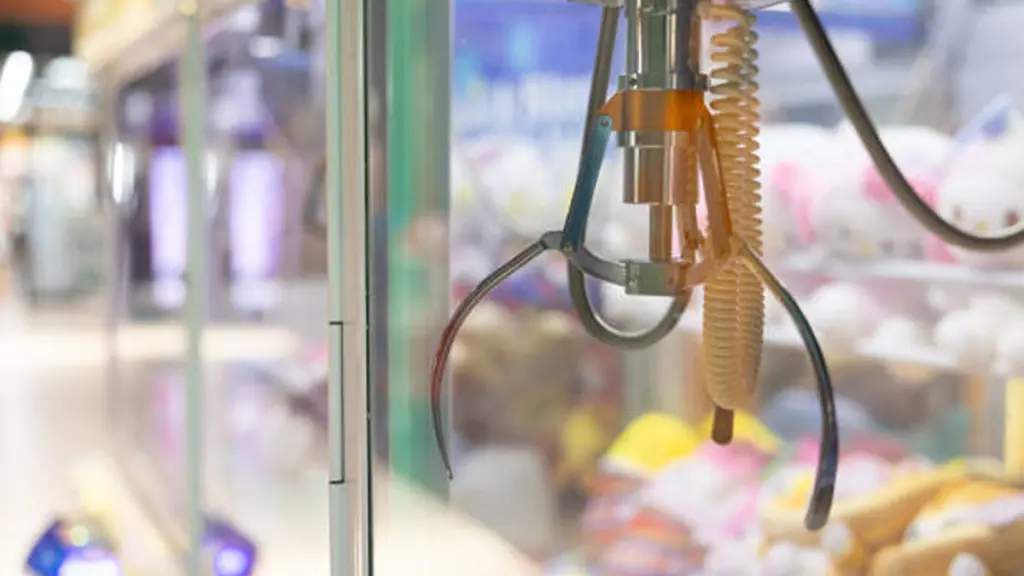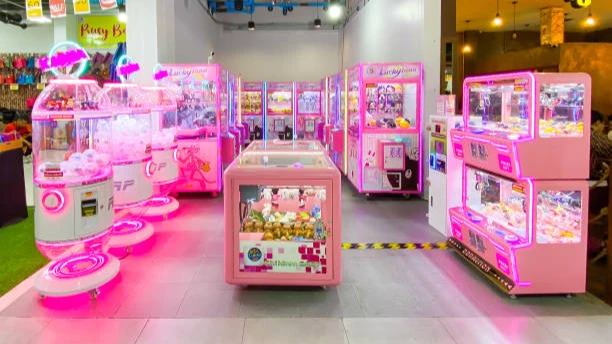


Opening a claw machine store involves more than choosing the right machines. One of the first decisions is how many machines your venue can actually support. Too few can leave valuable floor space unused, while too many can reduce walking space and leave machines underused.
Finding the right machine count is a sizing exercise, not a guess. It starts with your available floor area, expected foot traffic, price per play, and prize costs. This guide provides a practical machine-count model by venue size and shows how to turn that estimate into a machine mix and supplier order.
Why Machine Count Affects Revenue and Cost
Machine quantity shapes how much playing capacity your venue offers and how much it needs to spend to keep that capacity running.
The Revenue Ceiling
A larger machine count creates more chances to generate plays, especially when several customers want to play at the same time. However, adding machines only helps when customers actually use the available capacity.
One useful way to assess this is to look at machine utilisation. A machine that stays busy during peak hours can contribute more revenue than one placed in a low-traffic corner, even if both machines have the same play price. Repeat plays also matter because one customer may make several attempts during a single visit.
For planning purposes, estimate the number of plays your machines could handle during operating hours and apply a realistic utilisation rate. You can then multiply the estimated plays by your price per play to create a capacity-based revenue estimate. This gives you a working figure for comparing different machine counts before you commit to an order.
The Cost Floor
The other side of the calculation is the cost of keeping each machine in operation. Some costs stay relatively stable as the machine count changes, while others grow as you add more equipment.
- Shared costs: Rent, payment infrastructure, signage, and security equipment can support multiple machines across the same venue.
- Machine-related costs: Electricity, routine maintenance, spare parts, and prize restocking generally increase as you add more machines.
- Space costs: Every additional machine also uses floor space that could otherwise support walkways, prize displays, counters, or other customer areas.
This creates a practical limit on how many machines make sense for a venue. Filling every available space may increase playing capacity, but it can also reduce customer comfort and leave less room for other parts of the operation. A workable machine count should therefore support enough play capacity without making the venue difficult or costly to operate.
Plan Your Claw Machine Project with Confidence.
The Inputs: Floor Area, Traffic, Ticket Price, Prize Cost
Four practical inputs help turn a rough idea into a machine count that fits your venue, customer flow, and operating model.
Floor Area and Usable Space
The total size of a venue does not tell you how many claw machines it can hold. First, separate the space available for machines from areas needed for entrances, counters, storage, restrooms, staff use, and fire exits. Then consider the space around each machine, including the area where players stand and move between machines.
For initial planning, a claw machine may require around 1.5 to 2.5 square metres when player clearance is included. This gives you a useful estimate of your machine capacity, but the final number should also leave enough room for comfortable movement and other customer areas.
Expected Foot Traffic
Customer traffic helps determine whether your planned machine capacity matches the number of potential players. A busy venue may support more machines, while a location with lower traffic may not need to use all available floor space for machines.
Look beyond the daily visitor count. Peak periods matter because machines need enough capacity when demand is highest. If most visitors arrive during a few busy hours, a layout with too few machines may create queues, while too many machines can leave equipment underused during quieter periods.
Play Price and Prize Cost
The price of each play and the cost of prizes affect the volume and operating cost needed to support your machine count.
| Factor | What It Affects | Why It Matters |
|---|---|---|
| Play Price | Revenue from each play | A lower price generally requires more playing volume to reach the same revenue target |
| Prize Cost | Cost per prize won | Higher prize costs reduce the amount left to cover other operating expenses |
These two factors work together with your expected playing volume. For example, a lower play price may require more customer plays, while higher prize costs can increase the cost of serving those plays. Looking at both before setting your machine count gives you a more realistic basis for planning.
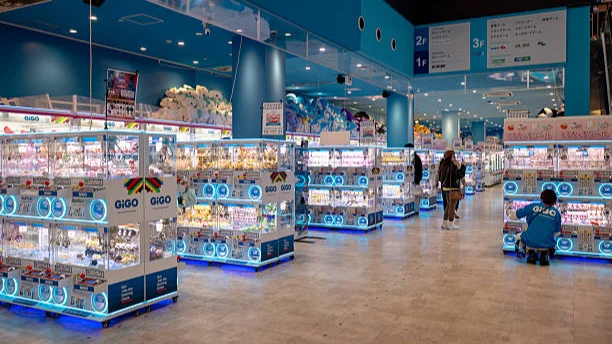
Machine-Count Model by Venue Size
With the key inputs defined, you can use venue size to set an initial machine-count range. These figures are planning references rather than fixed rules, since traffic, pricing, and the space available for machines will affect the final quantity.
Tongru offers claw machines in different sizes, from mini and medium models to giant and life-size machines. You can explore the available options in claw machines by size to compare models that may fit different venue requirements.
| Venue Size | Usable Machine Area | Practical Planning Range | Planning Focus |
|---|---|---|---|
| 50 sqm | 30–35 sqm | 8–12 machines | Walkways + prize counter |
| 100 sqm | 65–75 sqm | 18–28 machines | Zoning + customer flow |
| 300+ sqm | Depends on layout | 60–100+ machines | Full floor planning |
Small Venue: 50 Square Metres
A 50 sqm venue may leave around 30–35 sqm for machines after accounting for entrances, circulation, and other customer areas. Based on the space needed around each machine, this can support a higher physical capacity, but using all available space for machines is not always practical. For a first-time operator, 8–12 machines provides room for a small prize counter, comfortable walkways, and a visible entrance. This range also leaves some flexibility for customer movement during busy periods.
Medium Venue: 100 Square Metres
A 100 sqm venue can typically allocate around 65–75 sqm to the machine area, providing more capacity for both machines and customer areas. A practical planning range is 18–28 machines, depending on the venue layout and expected traffic. This size can support a dedicated prize display area, redemption counter, and clearer zoning. For example, higher-demand machines can be placed near the entrance, while other machine groups can be arranged deeper inside the venue.
Large Venue: 300+ Square Metres
At 300 sqm or more, machine count depends more heavily on the overall floor plan and operating model. A venue of this size may accommodate 60–100+ machines, but the final quantity should account for walkways, prize areas, entrances, service access, and customer circulation. Larger venues can also divide machines into different zones by machine type, prize category, or customer group, making the overall mix as important as the total number.
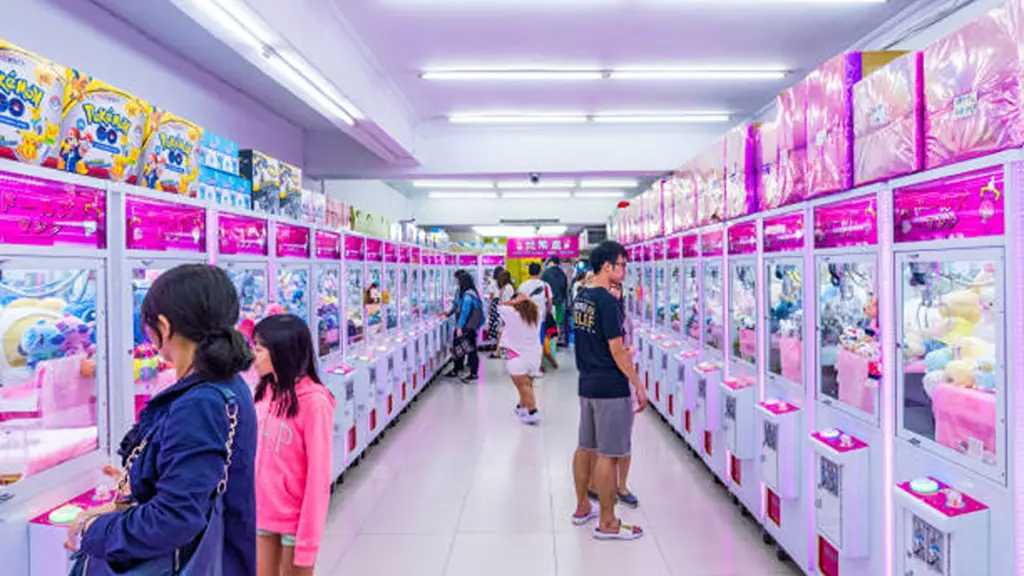
Balancing Machine Types in the Mix
Once you have an estimated machine count, the next step is to decide how many machines of each type your venue needs. A balanced mix can create different play options while making better use of the available floor space.
| Machine Type | Typical Footprint | Best For | Suggested Mix |
|---|---|---|---|
| Standard claw crane | 1.5–2.0 sqm | General audience, plush prizes | 40–50% |
| Mini claw machine | 0.8–1.2 sqm | High-density zones, smaller prizes | 15–25% |
| UFO / pusher hybrid | 2.0–3.0 sqm | Interactive play, premium prizes | 10–20% |
| Specialty / themed machines | 2.0–3.5 sqm | Signature attractions, themed areas | 10–15% |
These percentages are reference ranges rather than fixed requirements. The actual mix should depend on your venue size, target customers, prize categories, and the types of machines available from your supplier.
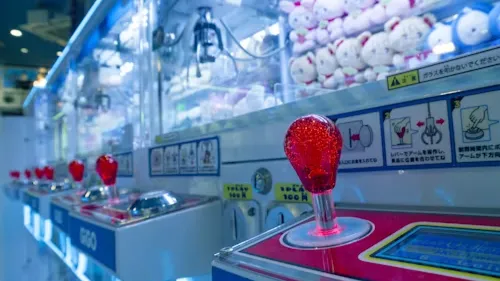
For example, standard claw machines can form the main part of the floor because they suit a wide range of prizes and customers. Mini machines can fill smaller spaces or create higher-density areas, while larger or specialty machines can be used as focal points. Combining different footprints and play formats also helps avoid a floor that looks repetitive.
For a new venue, it can be useful to start with a core group of standard machines and add smaller or specialty models based on available space and customer response. This gives you more flexibility than committing the entire floor to one machine type.
For venues that combine claw machines with other arcade attractions, the machine mix can also be planned around the overall entertainment environment. See Arcades & FECs for more application ideas.
From Count to Quote: What to Tell Your Supplier
Once you have a target machine count, turn your planning figures into clear information for the supplier. This helps the supplier understand your requirements and prepare a more accurate quote.
Start with your venue size, available machine area, and target machine count. If you have a floor plan, share it with the supplier along with the location of entrances, counters, storage areas, and other fixed spaces. The supplier can then check whether the planned quantity works with the available space and, where offered, provide a 2D or 3D layout for reference.
Next, provide your machine mix and prize requirements. Instead of requesting a total quantity without specifying the types, list how many standard, mini, or specialty machines you need. Also mention the prize size or category if it affects the machine configuration.
Finally, confirm the details that affect the total order cost and delivery plan:
- Quantity: Total machines and quantity of each model
- Configuration: Machine size, payment system, lighting, and other required options
- Lead time: Expected production time for the complete order
- Warranty: Coverage period and what is included
- Spare parts: Availability and replacement process
- Technical support: Installation guidance and after-sales service
Providing these details at the inquiry stage gives the supplier a clearer basis for pricing, production, and delivery. For projects that require machines, supporting equipment, and other services, you can also explore Tongru’s one-stop claw machine solution.
Scaling Up: Adding Machines Over Time
You do not have to fill the entire venue with machines on day one. A phased approach allows you to use early operating data to adjust your machine count and product mix.
Start Small, Validate, Then Expand
Begin with a portion of your target machine count and leave some capacity for future additions. During the first two to three months, track revenue per machine, play volume, machine type, and location. Compare the performance of different machines to identify which models and areas attract more plays. You can then use this data to decide whether to add machines, replace weaker performers, or change the machine mix.
This approach also reduces the amount of capital committed at the beginning and gives you room to adjust before expanding the full floor.
Seasonal and Event-Driven Additions
Machine demand may change during holidays, school breaks, local events, or other busy periods. If your venue experiences clear seasonal peaks, you can reserve part of your expansion budget for additional machines when demand increases.
When planning your initial order, also discuss repeat orders and lead times with your supplier. Knowing whether you can add a small number of machines later makes it easier to scale the venue based on actual performance rather than buying the full planned quantity upfront.
From Machine Count to Your Claw Machine Order
Estimating the right number of machines is the first step. Your final order should also consider machine types, sizes, prize categories, and available floor space. Tongru offers more than 28 claw machine models for different venue sizes and customer groups. Share your floor dimensions and target quantity with our team, and we can help plan a suitable machine mix and provide a free 2D or 3D layout. This gives you a clearer view of how the machines will fit your venue before you finalize the order.
Discuss Your Claw Machine Project Today
Frequently Asked Questions
How many claw machines do I need to open a store?
For a small store of around 50 square metres, 8 to 12 machines is a practical starting range. The exact number depends on your usable floor area after deducting circulation, counter, and storage space. A store that is too sparse feels uninviting; one that is too packed creates uncomfortable play conditions. The goal is a floor that looks full and energetic during peak hours while maintaining comfortable walkways.
How many claw machines fit in 100 square metres?
A 100 sqm venue typically has 65–75 sqm of usable machine floor after accounting for entrance, circulation, and service areas. At roughly 2 sqm per machine including player clearance, you can fit 18 to 28 machines comfortably. This allows for a mixed-type floor with standard cranes, mini machines, and a few specialty units.
How do I calculate how many machines to buy?
Start with your usable floor area divided by the per-machine footprint (approximately 1.5–2.5 sqm including player space). That gives you a physical maximum. Then factor in your expected foot traffic and peak-hour capacity — you need enough machines to serve peak demand without excessive queuing. Finally, check the revenue math: each machine must generate enough plays per day to cover its share of rent, electricity, maintenance, and prize costs.
Should I start with a few machines or a full floor?
Starting with 60–70% of your target count is usually the smarter approach. It reduces initial capital outlay and lets you observe which machine types and positions perform best before committing to a full order. You can add machines within the first few months based on real revenue data rather than projections.
How many machines make a claw machine store profitable?
Profitability depends on the relationship between machine count, play price, foot traffic, and operating costs — not on a fixed number. A small store with 8 machines in a high-traffic location can be more profitable than a large store with 40 machines in a low-traffic one. The key metric is revenue per machine per day: if it consistently exceeds the per-machine daily cost (rent share, electricity, maintenance, prize cost), the operation is profitable at that scale.